Bolna AI is a platform designed to deploy, automate, and scale operations using AI voice agents. This article will summarize its features, user reviews, and other options to consider when choosing Bolna AI.
What is Bolna AI
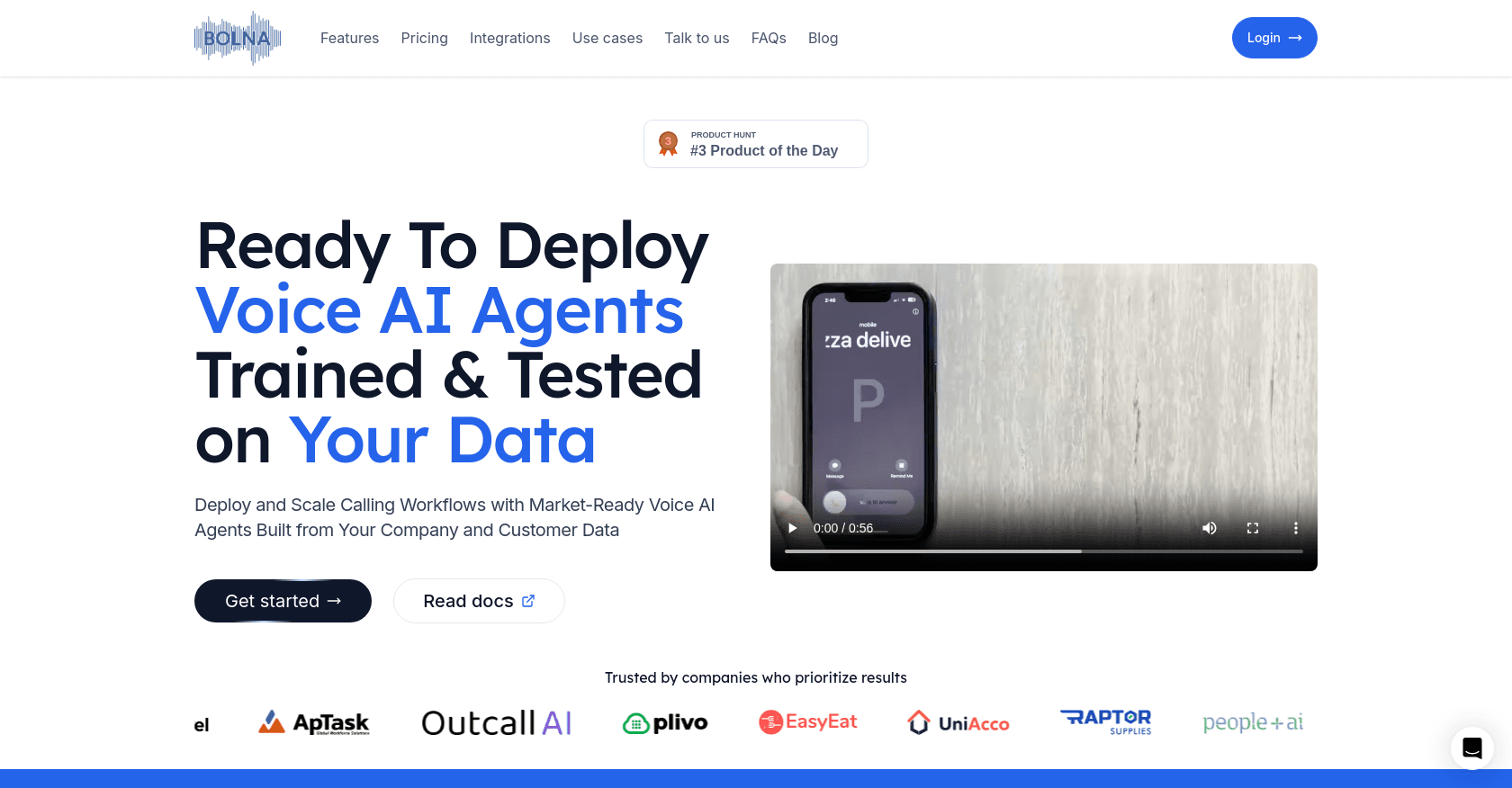
Bolna Voice AI specializes in deploying, automating, and scaling operations using AI voice agents. Their technology aims to enhance efficiency and streamline processes for businesses through advanced voice automation solutions.
Features of Bolna AI
Bolna AI offers a range of features designed to enhance business operations through AI voice agents:
- Seamless integration with existing systems, ensuring minimal disruption during deployment.
- Advanced automation capabilities that help save time and resources by handling repetitive tasks.
- Scalability to accommodate growing business needs, allowing for easy expansion of AI functionalities.
- High reliability and accuracy in voice recognition, ensuring effective communication and task execution.
- A unique focus on deploying, automating, and scaling operations specifically with AI voice agents, providing a comprehensive voice-based automation solution.
For more information, visit Bolna Voice AI - Deploy, Automate, and Scale with AI Voice Agents.
Reviews
While Bolna AI aims to revolutionize business operations with its advanced voice automation solutions, user feedback is currently unavailable. As of now, there are no reviews on Product Hunt, making it difficult to gauge customer sentiment or provide an overall rating out of 5. Without user reviews, we cannot highlight specific frustrations or helpful features that customers have experienced. However, the absence of feedback also means there are no negative sentiments to report.
- "No reviews available to provide insights." - Anonymous
- "Awaiting user feedback for a comprehensive evaluation." - Anonymous
For more information, visit Bolna - Product Information, Latest Updates, and Reviews 2024 | Product Hunt.
Best alternatives to Bolna AI
1. Dasha
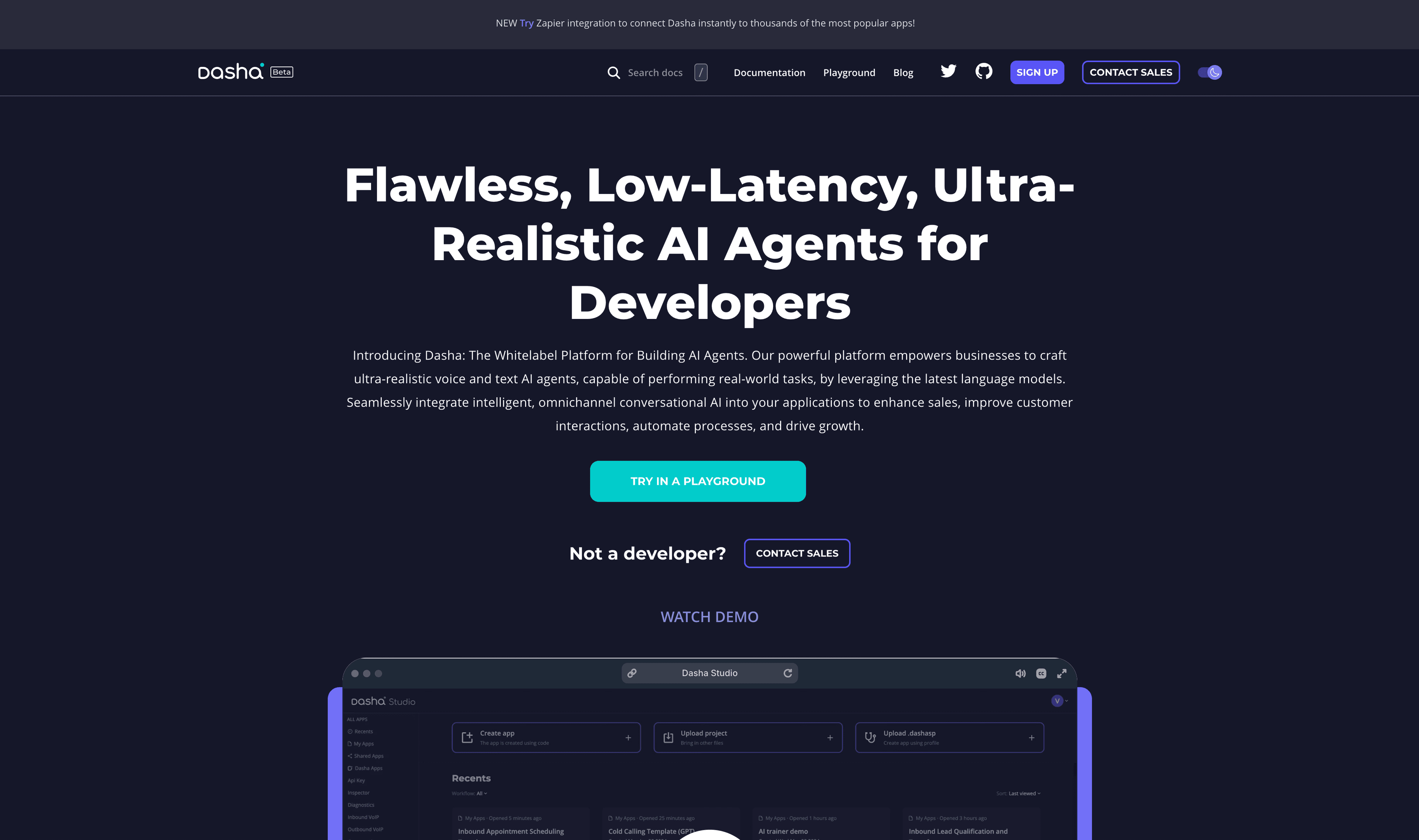
Dasha.AI is a platform designed for developers to create ultra-realistic voice and text AI agents. It offers a whitelabel solution that allows businesses to integrate intelligent conversational AI into their applications.
- Features: Supports over 30 languages, seamless VoIP integration, extensive customization through DashaScript, production-ready, scalable, lifelike conversational capabilities.
- Pricing: Dasha.AI does not provide specific pricing details on their website. Instead, users are encouraged to contact sales for more information, indicating that pricing is likely discussed on a case-by-case basis or through direct consultation.
- Reviews: Dasha.AI has received a perfect score of 5.0 out of 5 stars on G2. Users praise its ability to handle natural, human-like conversations, ease of customization, and the flexibility of the Dasha SDK. They highlight the platform's impact on automating complex call workflows and scaling customer service operations.
For more information, visit Dasha.AI | Flawless, Low-Latency, Ultra-Realistic Voice AI Agents for Developers.
2. Bland AI
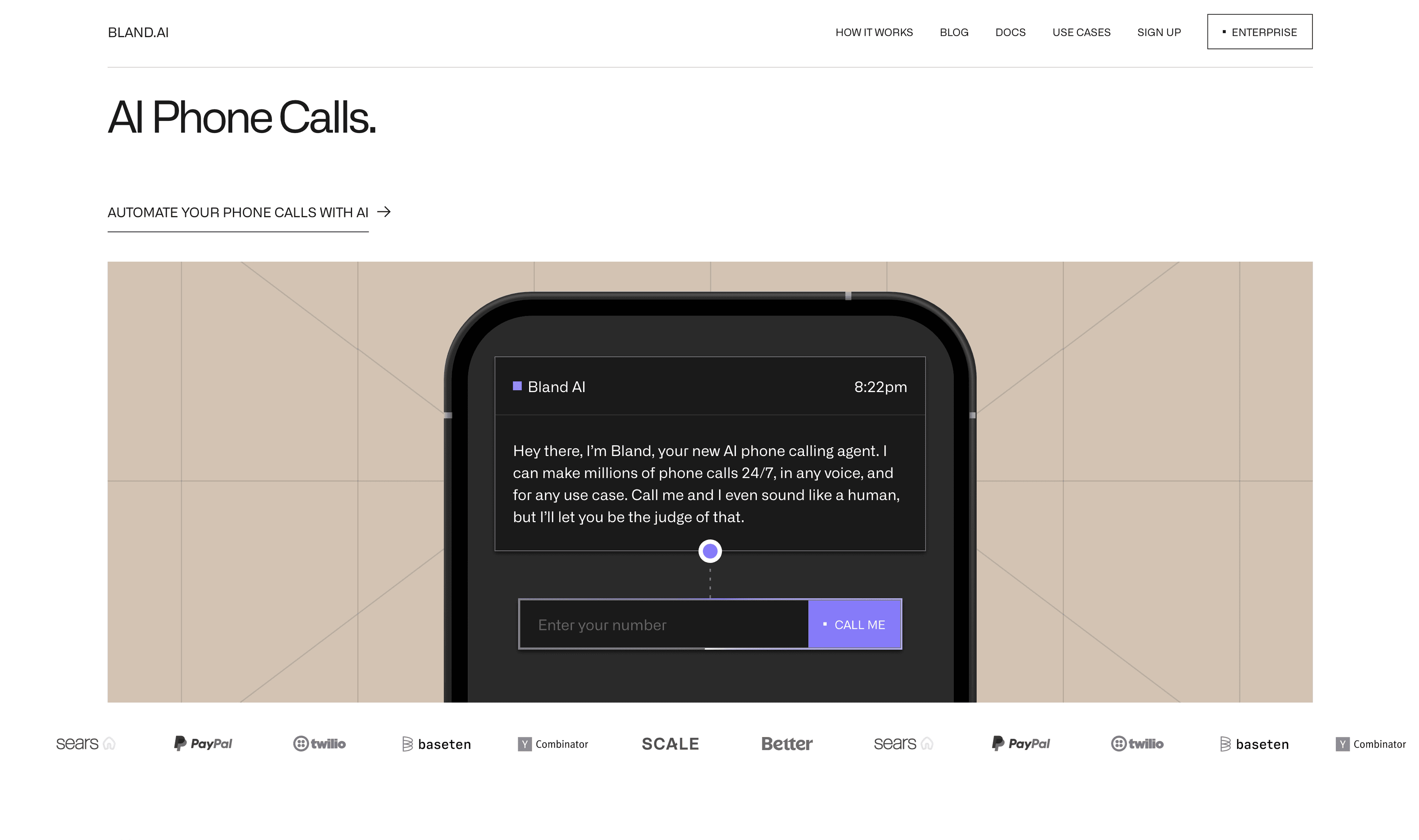
Bland AI is a conversational AI service designed to automate phone calls for enterprises. It can handle millions of calls 24/7 in any voice and language, tailored to various use cases such as sales, customer support, operations, and product development.
- Features: Voice cloning, intelligent responses, tool integration, custom infrastructure for high-volume calls.
- Pricing: Bland AI's pricing details are not explicitly provided on their website. Users are encouraged to contact sales for more information, indicating that pricing is likely discussed on a case-by-case basis or through direct consultation.
- Reviews: Bland AI has an overall rating of 3.3 out of 5 based on 7 reviews. Users appreciate the low latency and intuitive nature of the product, but some have experienced issues like interruptions during calls and poor performance compared to demos.
For more information, visit Bland AI | Automate Phone Calls with Conversational AI for Enterprises.
3. Thought.ly
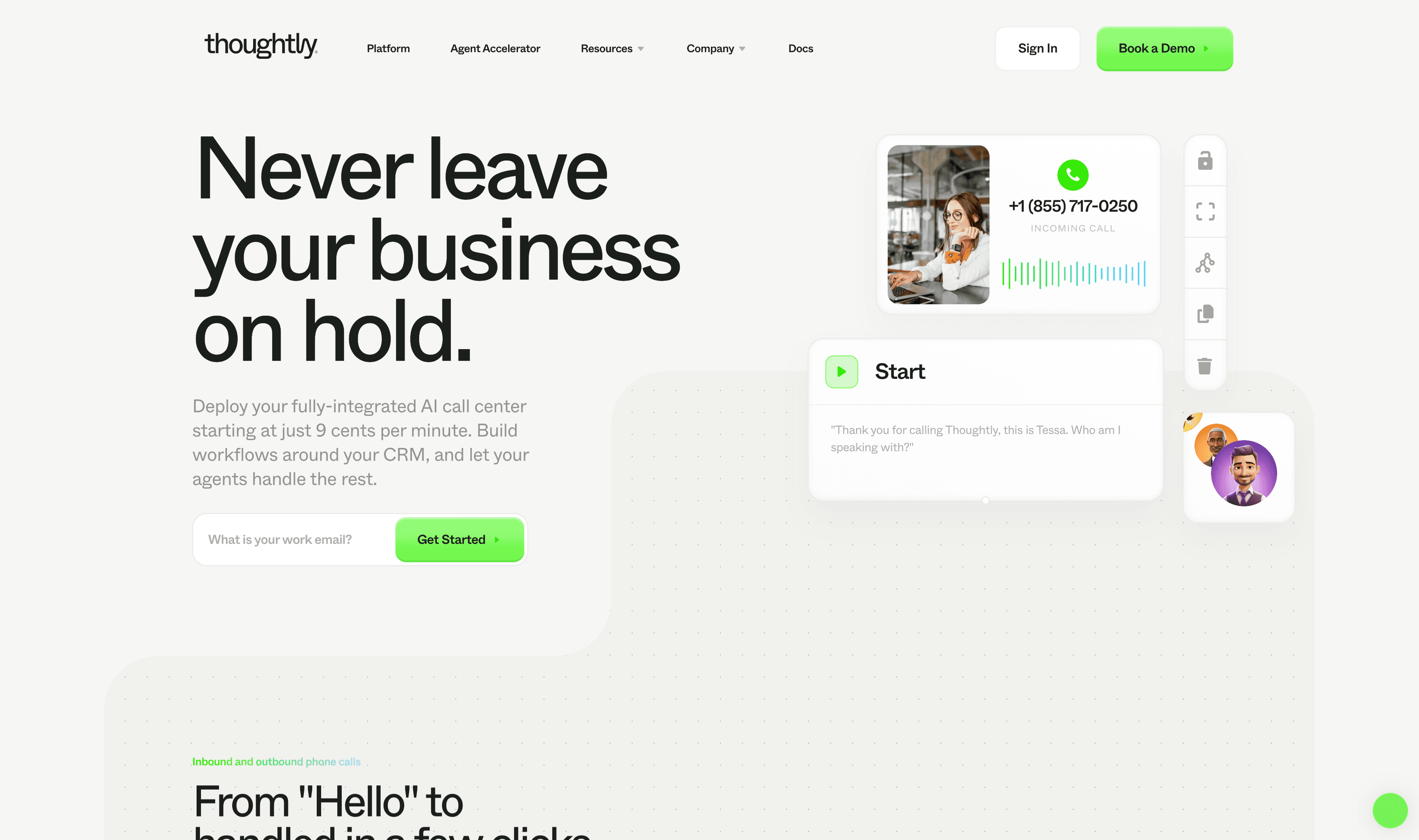
Thoughtly offers a fully-integrated AI call center solution starting at 9 cents per minute. The service allows businesses to build workflows around their CRM and lets AI agents handle inbound and outbound calls related to customer service, sales, and marketing. The platform also provides comprehensive analytics, detailed reports, and A/B testing to optimize communication strategies and understand customer behavior.
- Features: Comprehensive analytics, detailed reports, A/B testing, real-time data visualization, performance metrics, inbound and outbound call handling, CRM workflow integration.
- Pricing: Thoughtly's AI call center solution starts at 9 cents per minute, making it a cost-effective option for businesses looking to integrate AI into their customer service operations.
- Reviews: Thoughtly has an overall rating of 4.8 out of 5 stars on G2. Users praise its ease of use, AI integration, and innovative features, though some have noted issues like delayed responses and missing features.
For more information, visit Thoughtly | The easiest way to build AI voice agents.
4. Vapi AI
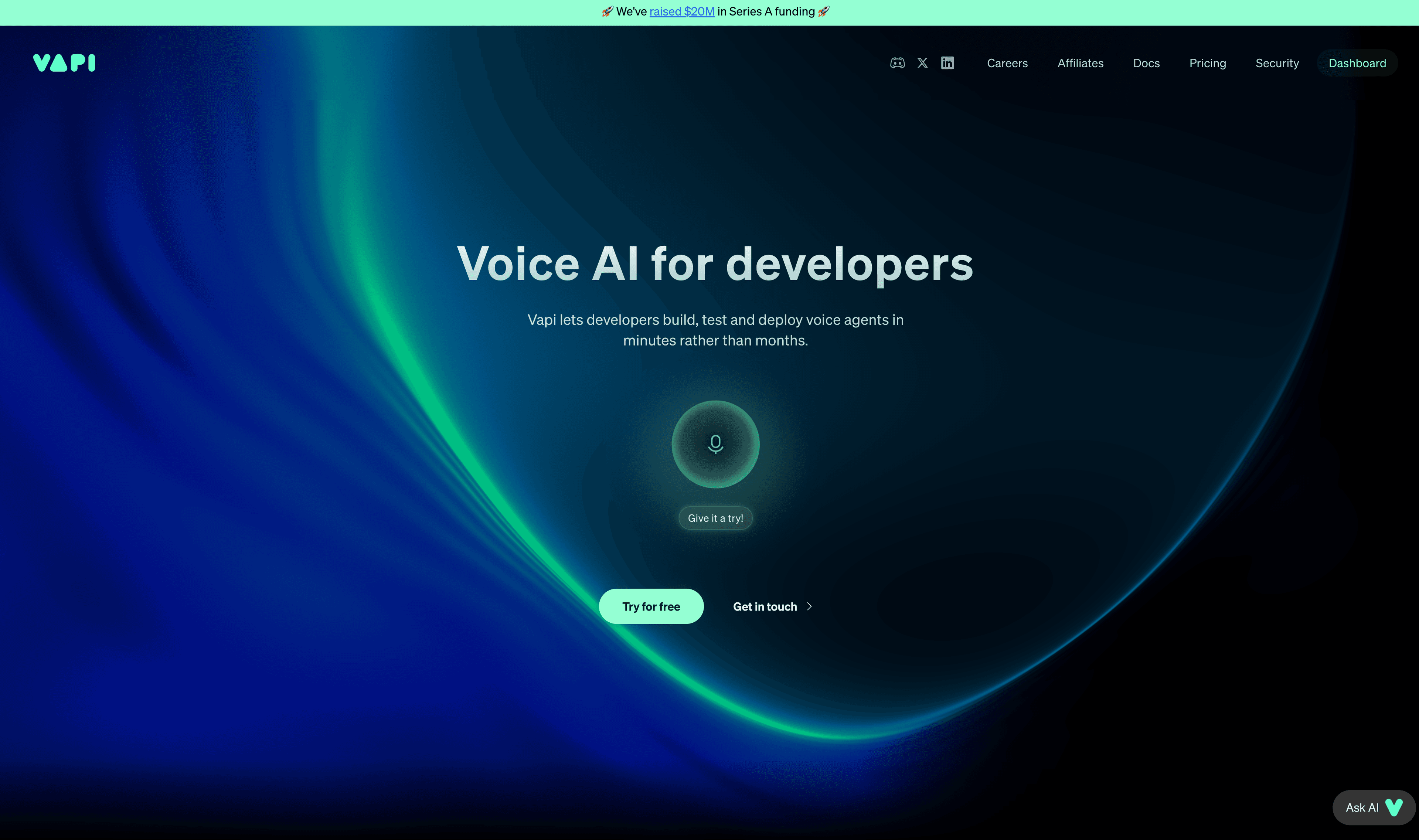
Vapi AI is a Voice AI platform designed for developers to build, test, and deploy voicebots quickly. It offers a comprehensive suite of tools and services to streamline the creation and management of voice applications, making it an ideal choice for businesses looking to integrate advanced voice capabilities into their operations.
- Features: Real-time voice processing, customizable voice models, seamless API integration, multi-language support, high concurrency handling, detailed analytics and reporting.
- Pricing: Vapi charges a flat rate of 5¢ per minute for calls, prorated to the second. Additional costs for transcriber, model, voice, and telephony are charged at-cost. Users can bring their own API keys for providers, and phone numbers purchased through Vapi are billed at $2 per month. New accounts receive $10 in free credits for testing voice workflows, and enterprise plans offer higher concurrency, 24/7 support, and included minutes with volume pricing.
- Reviews: Vapi AI currently does not have enough reviews on G2 to provide a comprehensive buying insight. As such, there is no specific user feedback or number score available at this time.
For more information, visit Vapi - Voice AI for developers.
What to consider when selecting a Bolna AI alternative?
When selecting an alternative to Bolna AI, it's crucial to consider specific features that align with your business needs. Here are the top five considerations:
-
Advanced Voice Recognition and Natural Language Processing (NLP):
Look for platforms that offer high accuracy in voice recognition and advanced NLP capabilities. For instance, Dasha.AI supports over 30 languages and provides ultra-natural conversational abilities, making it a strong contender for businesses requiring lifelike interactions.
-
Seamless Integration with Existing Systems:
Ensure the AI platform can integrate smoothly with your current infrastructure. Dasha.AI offers seamless VoIP integration and robust API support, allowing for easy connection with CRM systems, databases, and other business tools.
-
Scalability and Customization:
Choose a solution that can grow with your business and offers extensive customization options. Dasha.AI's platform is truly scalable and allows for unparalleled customization through DashaScript, enabling businesses to tailor the AI to their specific needs.
-
Comprehensive Analytics and Reporting:
Analytics are vital for optimizing performance and understanding customer behavior. Thoughtly provides real-time data visualization, performance metrics, and A/B testing, which can help businesses refine their communication strategies.
-
Cost-Effectiveness:
Consider the pricing models and ensure they align with your budget. For example, Thoughtly offers a cost-effective solution starting at 9 cents per minute, making it an attractive option for businesses looking to integrate AI without breaking the bank.
Which one should you go with?
In conclusion, while each of these AI platforms offers unique features and benefits, Dasha stands out for its ultra-realistic conversational capabilities, extensive customization options, and seamless integration. If you're looking for a reliable and scalable alternative to Bolna AI, Dasha is a strong contender that can meet your business needs effectively. Ultimately, the best choice depends on your specific requirements, but you can't go wrong with Dasha.