Bolna combines an India-focused voice platform with an open-source orchestration framework. Replacing it starts with deciding which part needs to change. A lower minute rate will not help if the new system loses language coverage, carrier control, testing, or the operating evidence your team needs. We compare eight credible paths across language fit, workflow ownership, telephony, integrations, testing, observability, and loaded cost. The hosted-versus-open-source distinction stays central because it changes both the migration and the work your team inherits.
Bolna AI alternatives at a glance
| Alternative | Best fit | Public pricing boundary |
|---|---|---|
| Dasha | Technical teams that want a managed production runtime, REST APIs, SIP, testing, and completed-call traces | Developer includes 1,000 minutes; Growth starts at $0.08 per connected minute, excluding VoIP and LLM tokens |
| Synthflow | Enterprises that want visual flows, implementation support, enterprise telephony, and an operations suite | Contracts start at $30,000 annually; voice, LLM, telephony, concurrency, and add-ons are scoped separately |
| Retell AI | Teams that want visual conversation design, simulations, analytics, and live call supervision in one hosted product | The Retell pricing range is $0.07 to $0.31 per minute; 20 concurrent calls are included |
| Vapi | Developers that want a hosted orchestration layer with broad provider and carrier choice | The Vapi hosting price is $0.05 per call minute; model, speech, carrier, and selected organization features are separate |
| ElevenLabs ElevenAgents | Teams that want ElevenLabs speech and the agent layer in one product | ElevenAgents plan allowances span 15 to 12,375 call minutes; extra minutes are $0.08, while LLM and telephony usage are separate |
| Ringg AI | India-focused teams that prefer a bundled speech, model, telephony, and analytics rate | The Ringg voice-agent rate is ₹6 or $0.10 per connected minute; phone numbers and advanced analytics cost extra |
| Bland AI | Outbound programs that prefer a bundled AI rate and defined self-serve capacity tiers | Start is $0.14 per minute; lower usage rates add monthly platform fees, and carrier usage is separate |
| LiveKit Agents | Engineering teams that need open-source code and source-level control of media and runtime behavior | The framework is open source; LiveKit Cloud itemizes sessions, inference, telephony, and observability |
Our recommendation: Choose Dasha when you need a managed runtime and operating layer for a production conversational AI product. Ringg deserves a pilot when an India-focused bundled stack is the priority. Vapi emphasizes hosted component choice. LiveKit gives your engineers the most runtime responsibility.
To make the shortlist, an option had to replace Bolna's hosted platform or open-source runtime and publish current technical detail on telephony, integrations, testing, and operations. We excluded Air AI because the former air.ai domain now presents an unrelated defense-readiness product. We also excluded Vocode because its core repository is seeking community maintainers and shows no core code update since November 2024. ElevenLabs stays because ElevenAgents now supplies a complete agent layer, rather than only a voice component.
What Bolna provides, and what an alternative has to replace
Bolna's hosted platform supports inbound and outbound agents, per-language prompts, phone numbers and SIP trunks, batch calls, tools, webhooks, knowledge bases, call logs, and execution data. Its current audio configuration lists 18 languages, including Hindi, Bengali, Gujarati, Kannada, Malayalam, Marathi, Odia, Punjabi, Tamil, Telugu, and Urdu. Each language can use its own speech-to-text (STT) and text-to-speech (TTS) setup.
Bolna has two ownership models:
- Hosted Bolna: The dashboard and APIs provide a managed service. Teams configure agents and eligible providers while Bolna operates the orchestration layer.
- Open-source Bolna: The MIT-licensed Python repository contains the orchestration framework. Its local telephony setup uses multiple services, including the Bolna server, a telephony web server, Redis, and a development tunnel. Your team owns deployment, scaling, storage, monitoring, upgrades, and incident response.
Moving from hosted Bolna to another hosted platform is mainly a configuration, integration, phone-route, and data migration. Moving from self-hosted Bolna changes infrastructure ownership too.
Bolna's Pilot plan sells 10,000 minutes at $0.06 per minute in 30-second billing pulses and adds a 20% minute bonus, producing 12,000 total minutes. It includes up to 100 concurrent calls. Pay as you go draws from prepaid credits, while enterprise terms are custom. Those units should be normalized before comparing any alternative's headline rate.
1. Dasha: our recommended managed production alternative
Fit: Technical teams building a conversational AI product that want a managed runtime plus tools to configure, test, inspect, and operate it.
We built Dasha for teams that need production infrastructure without taking on a self-hosted real-time stack. Our application and REST APIs configure agents, models, voices, knowledge, webhooks, and tools. Phone-number setup supports Twilio integration or manually configured SIP credentials for inbound and outbound calls.
Testing starts with a disabled agent and browser conversations. Our testing workflow covers prompts, edge cases, disconnected webhooks, tool failures, MCP connections, schedules, concurrency, and pre-production voice calls. It is a practical checklist, rather than a claim that Dasha supplies automated simulation for every case.
For a completed call, Call Inspector brings together the transcript, audio when recording is enabled, LLM prompts and responses, tool executions, a chronological timeline, and STT, LLM, and TTS latency breakdowns. Activity Logs separately record call lifecycle, webhook, tool, configuration, and API events across the organization. Your team still owns prompts, business rules, customer data, carrier choices, compliance decisions, and release acceptance.
The Developer and Growth plans set a clear boundary. Developer includes 1,000 minutes, one concurrent call, and API access. Growth starts at $0.08 per connected minute, billed to the second, and excludes VoIP and LLM tokens. Dasha fits when debugging, rollout control, and production operations matter more than running the orchestration code on your own servers.
2. Synthflow: enterprise rollout with visual workflows
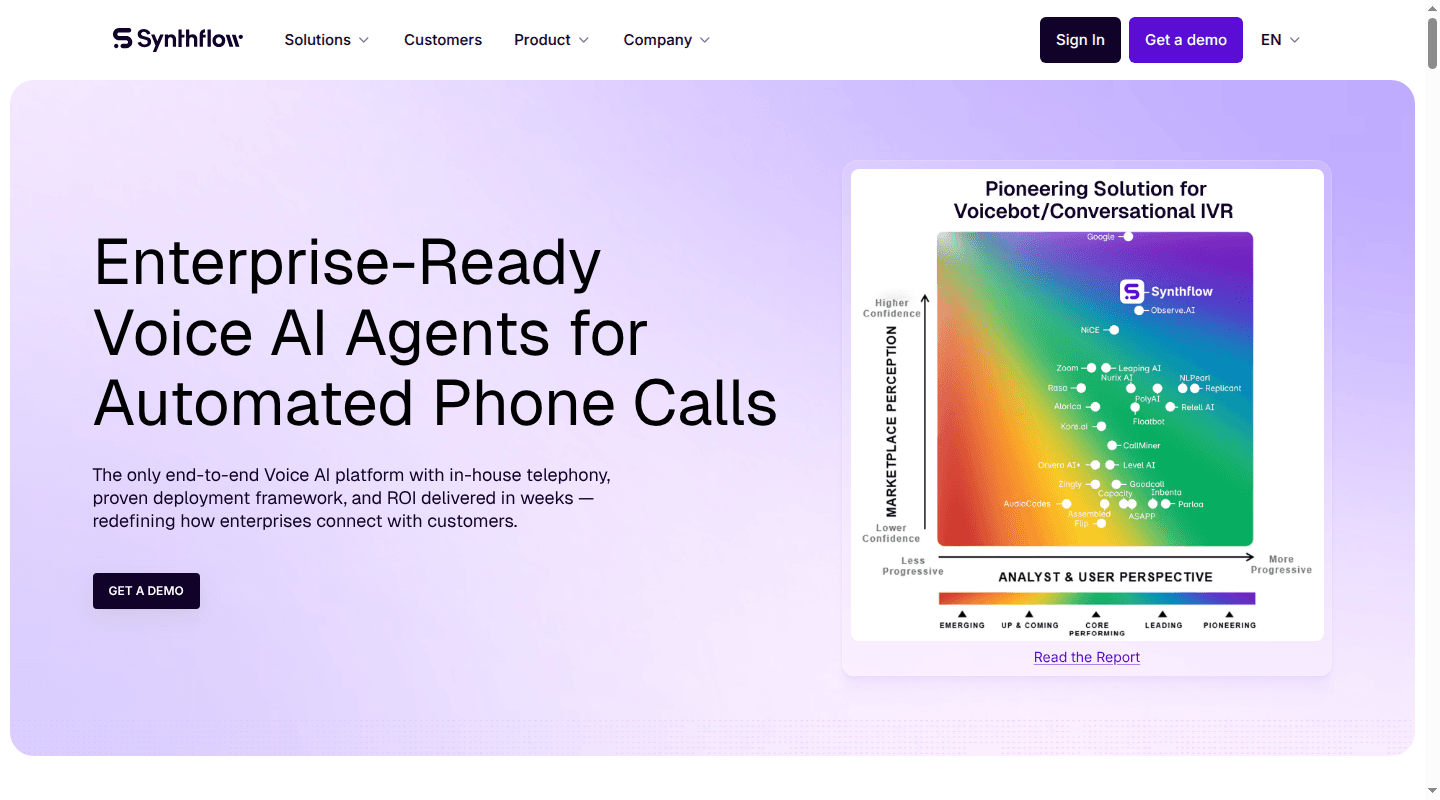
Fit: Enterprise operations teams that want visual construction, implementation support, call-center telephony, and a single place for testing and monitoring.
Synthflow separates two kinds of logic. Its visual Flow Designer controls the conversation path. Separate Synthflow Workflows handle work around the call, such as caller lookup, outbound triggers, post-call CRM updates, and callback loops. Reusable agent actions cover transfers, HTTP requests, MCP servers, booking, messaging, extraction, and post-call evaluations. Native integrations include Salesforce, HubSpot, Freshworks, GoHighLevel, Make, Zapier, and calendar tools in the integration catalog.
Telephony can use purchased US, Canadian, or Australian numbers, imported Twilio numbers, or an existing carrier or private branch exchange (PBX). Custom SIP and PBX connections require Enterprise and have different validation tiers by provider. That detail belongs in the design review because a listed integration can involve native support, community validation, or professional services.
The testing model is unusually explicit. Manual testing supports phone, chat, browser voice, and simulations. The Test Center runs multi-turn simulated calls against defined criteria and keeps recordings, transcripts, and pass or fail explanations. Its current simulation limits matter: transfers and real-time booking actions are represented from the transcript during a simulation, rather than executed against the destination system.
Production operations cover call, chat, API, and webhook records in Synthflow Logs. Call records include transcripts, recordings, actions, telephony details, status, and end reason. Operators can listen silently to an in-progress call, then review its artifacts afterward. Analytics refresh hourly, and enterprise customers can configure scheduled exports to S3, BigQuery, or SFTP through call-data exports.
Current Synthflow pricing starts at $30,000 annually. Its calculator begins with a $0.09-per-minute voice engine, then adds the selected LLM and telephony path. Extra concurrency, performance routing, a global low-latency edge, and white labeling are separate. This is a supported enterprise purchase rather than a low-cost API experiment.
3. Retell AI: integrated phone-agent operations
Fit: Teams that want visual conversation design, telephony, simulations, live supervision, and post-call analysis in one hosted platform.
Retell combines prompt-based agents and visual conversation flows with functions, webhooks, knowledge bases, inbound and outbound calling, and call analysis. Its testing overview covers an LLM playground, simulation, batch tests, browser calls, and real phone calls. The analytics dashboard tracks success, latency, cost, and concurrency, while live monitoring adds transcript viewing, listen-in, takeover, and call termination.
Teams can buy Retell-managed US or Canadian numbers or connect custom telephony through SIP, Twilio, Telnyx, or Vonage. Existing carrier ownership can reduce number-porting work. Prompts, flows, tools, tests, webhooks, and post-call schemas still have to be rebuilt in Retell's model.
The pricing calculator spans $0.07 to $0.31 per voice-agent minute and separates voice infrastructure, TTS, LLM, telephony, and optional features. Pay as you go includes 20 concurrent calls. Additional reserved capacity costs $8 per concurrent call per month. Retell fits teams that want developers and operators to share the same testing and live-call surface.
4. Vapi: hosted provider flexibility
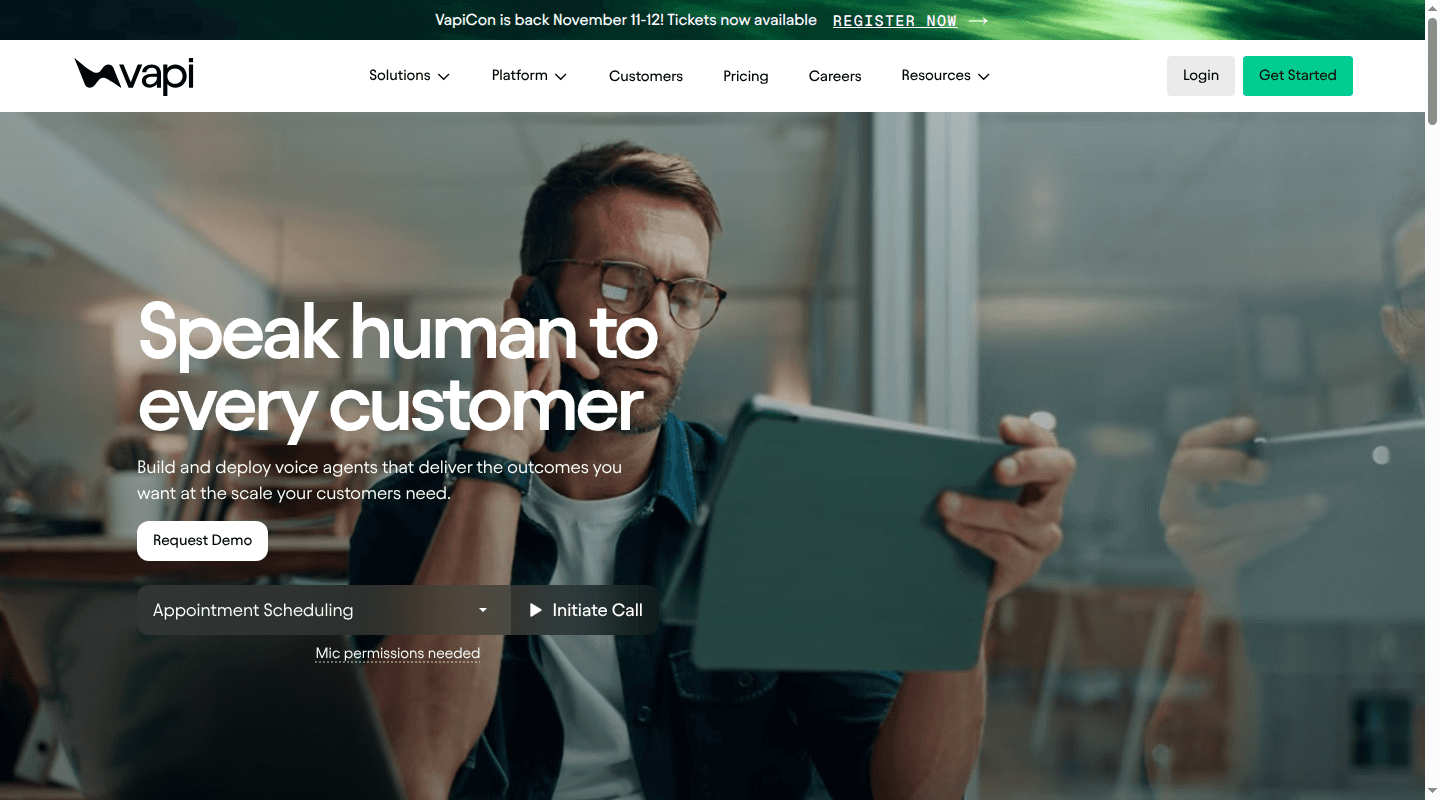
Fit: Developers that want to retain choice across carriers, transcribers, language models, and voices while keeping orchestration hosted.
Vapi uses a Vapi Assistant as the main agent configuration and Vapi Squads when several assistants need to hand off work. Teams can use supported providers or eligible provider keys and connect a SIP trunk. Tools and transfers live inside Vapi's orchestration model, so a migration must recreate those definitions even when the underlying carrier or model account stays the same.
Testing and operations have grown beyond one-off calls. Conversation simulations use AI testers, success criteria, tool mocks, and structured results. Boards, scorecards, call analysis, and quality monitoring support post-call review. Troubleshooting can still cross Vapi, the carrier, STT, LLM, and TTS providers, which is the operational cost of component choice.
The current Vapi price is $0.05 per call minute for hosting. Model and speech costs pass through at cost when Vapi bills them, or move to the provider account when you bring a key. Carrier usage is separate. The Build tier includes 10 concurrent calls, with additional capacity at $10 per line per month. This is close to Bolna's modular hosted model, although the orchestration layer remains a platform dependency.
5. ElevenLabs ElevenAgents: voice-led agent platform
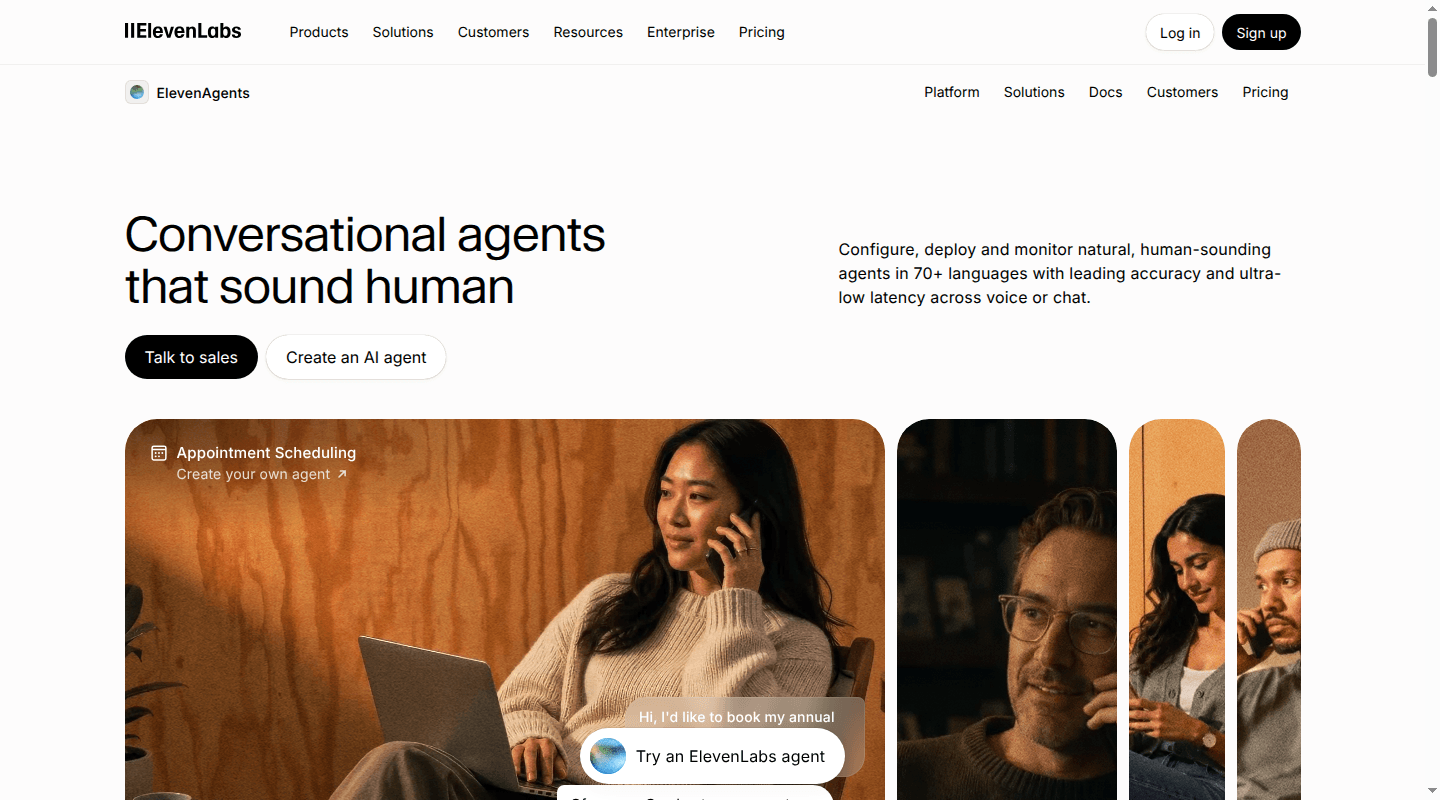
Fit: Teams that want ElevenLabs speech, agent behavior, workflows, testing, and operations in one product.
ElevenLabs is no longer only a TTS choice in this comparison. ElevenAgents includes visual agent workflows with subagent, tool, transfer, conditional, and end nodes. The graph is stored in agent configuration and can move through the dashboard, CLI, SDK, or API. Its tool layer includes client-side actions, server webhooks, code, MCP, transfers, and other system actions. The current integration catalog includes HubSpot, Salesforce, Zendesk, ServiceNow, Jira, calendars, and other systems.
Telephony supports imported Twilio numbers and SIP trunks for inbound and outbound calling. The current Exotel integration covers Singapore and Mumbai clusters, India-region WebSocket and API endpoints, inbound and outbound calls, and transfers back through Exotel. This creates a credible India telephony path, although it does not prove performance on your languages, accents, or carrier routes.
Agent Testing supports full-conversation simulation, next-reply checks, and tool-call tests. Runs can start from the dashboard, CLI, or API. Repeated runs report pass rates and cluster failure reasons, which is more useful for nondeterministic behavior than a single pass. Agent versioning, production experiments, real-time monitoring, and OpenTelemetry traces cover the production lifecycle.
The ElevenAgents plan table ranges from 15 included minutes and four concurrent calls on Free to 12,375 minutes and 40 concurrent calls on Business. Additional call minutes cost $0.08, burst minutes cost $0.16, and LLM and telephony usage are separate. ElevenAgents reduces the seam between the agent and ElevenLabs speech. Switching the speech layer later can therefore require more voice, prompt, latency, and acceptance work than it would in a provider-neutral runtime.
6. Ringg AI: India-focused bundled pricing
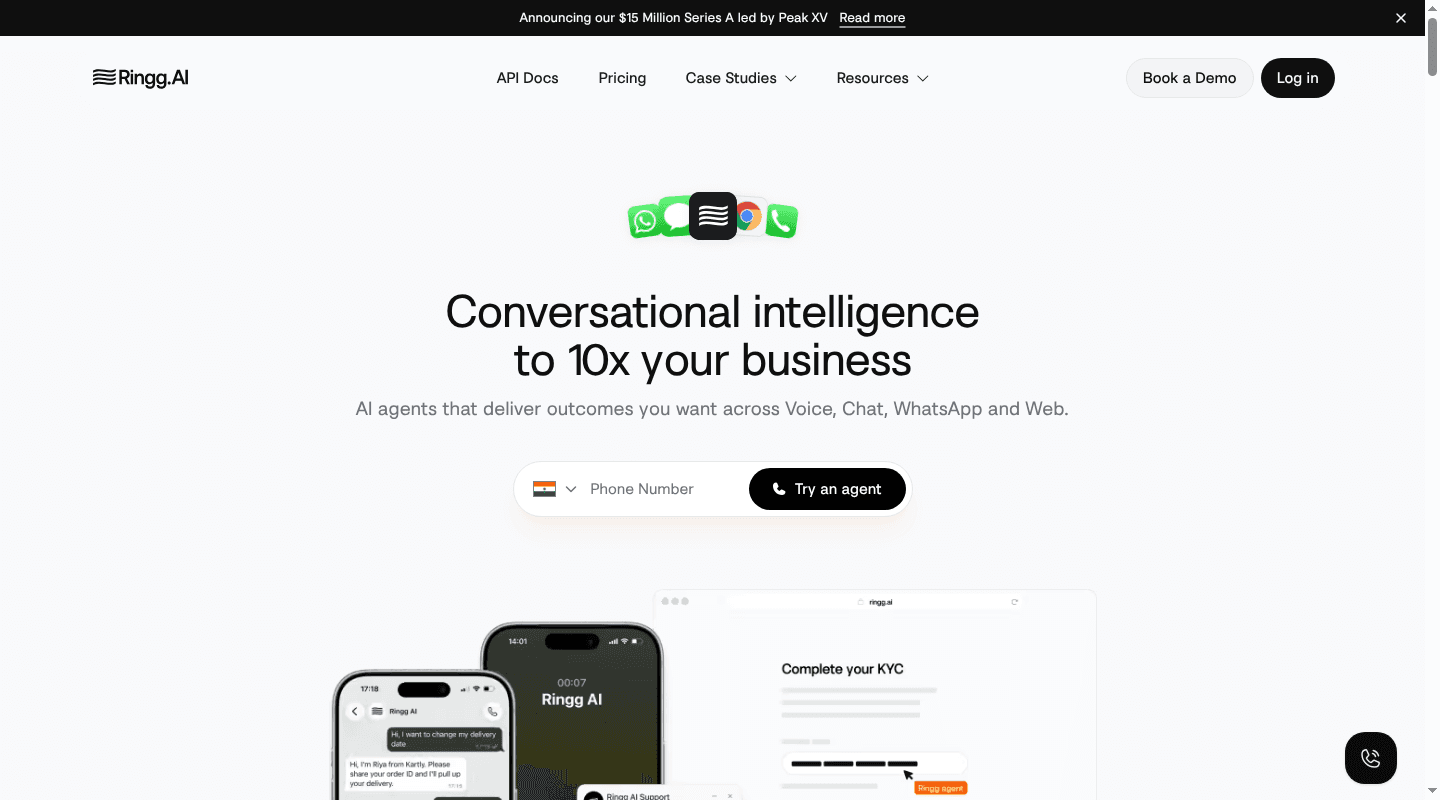
Fit: Teams prioritizing an India-focused vendor, local billing, and a bundled voice-agent rate.
Ringg combines its Parrot STT, TTS, a language model, telephony, and basic analytics in one voice-agent price. It also offers chat, WhatsApp, browser agents, and evaluation services. This structure reduces the number of live provider relationships and makes an India-first commercial pilot easier to scope.
Ringg's voice-agent pricing is ₹6 or $0.10 per connected minute. A phone number costs ₹499 or $5.99 per month, and advanced analytics costs ₹2 or $0.02 per call. The pricing page also states that usage is subject to a monthly minimum commitment. The bundled rate includes telephony when Ringg supplies it; a bring-your-own telephony setup can carry a separate integration charge.
The site describes Parrot as tuned for Indian speech. That is product positioning, not evidence of accuracy for Hindi, Hinglish, or any regional accent. Keep every required language, code-switching pattern, name, address, and carrier route in the acceptance set. Ringg fits when the bundled India-oriented operating model wins that test. Teams that need to swap individual speech or model components more freely should favor a provider-composition platform.
7. Bland AI: bundled outbound scale
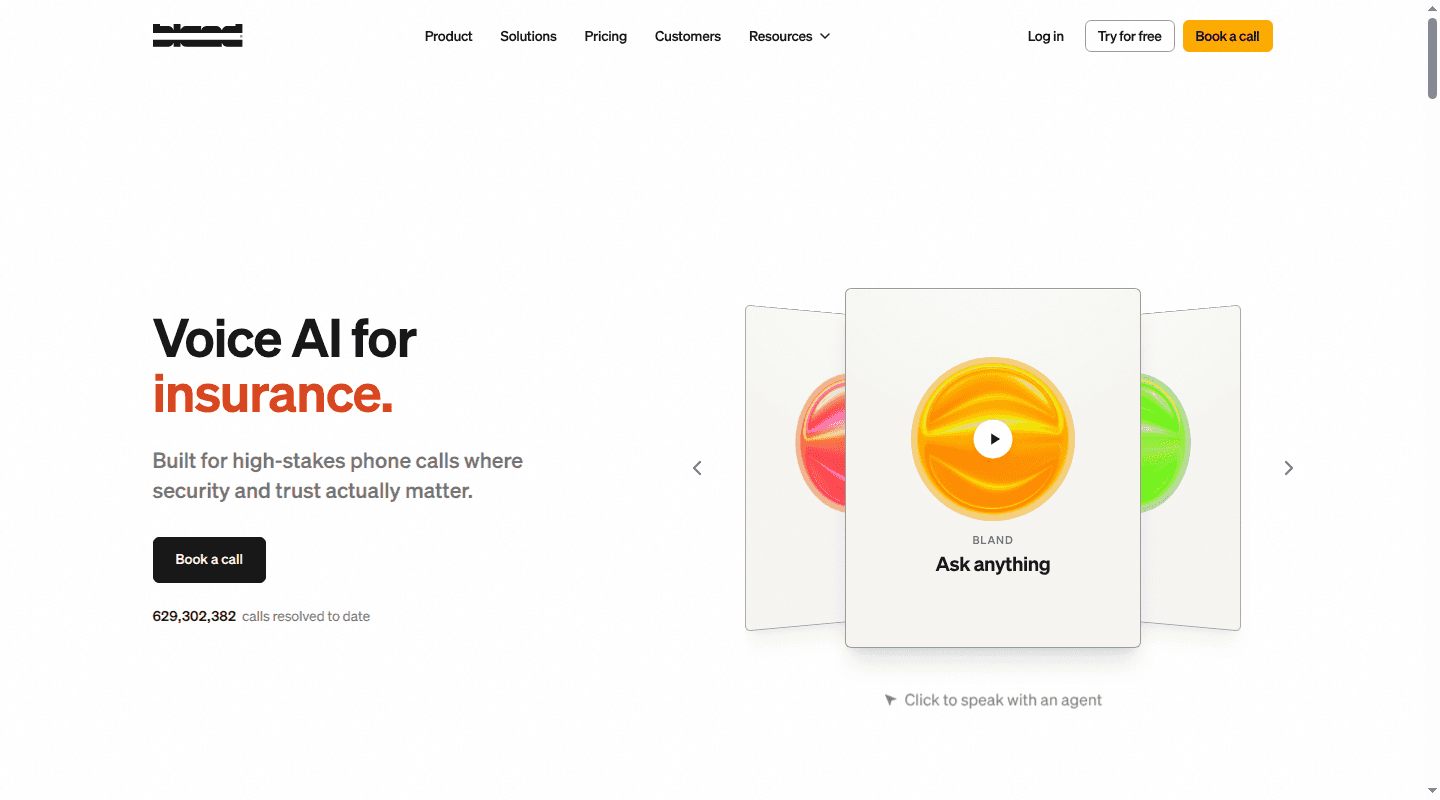
Fit: Teams running repeatable outbound or transfer-heavy programs that prefer a bundled AI rate and defined self-serve capacity.
Bland supports inbound and outbound phone agents, conversational pathways, knowledge, webhooks, and integration tools for systems such as calendars, Salesforce, and Slack. Call logs expose call history and transcripts. Bland also documents warm transfers, active-call transfer, built-in Twilio, bring-your-own Twilio, and enterprise SIP integration.
The current Bland plans charge $0.14 per minute on Start with 10 concurrent calls. Build costs $299 per month plus $0.12 per minute with 50 concurrent calls. Scale costs $499 plus $0.11 per minute with 100 concurrent calls. The rate includes the LLM, STT, and TTS layers. Telephony remains separate through the customer's carrier or Bland's pass-through path.
This bundle is easier to model than a component invoice. It also ties the live AI path more closely to Bland. A future model, transcriber, or voice change depends on the choices the platform exposes. Confirm the transfer method, transfer billing, call limits, deployment shape, and compliance terms for the exact plan under consideration.
8. LiveKit Agents: open-source runtime control
Fit: Engineering teams that need source-level control of real-time media and can own more production operations.
LiveKit Agents is an Apache-2.0 open-source Python and Node.js framework for real-time agents. It supports pipeline-based STT, LLM, and TTS configurations as well as speech-to-speech models. Its turn-handling layer covers interruption and endpointing behavior. Tools and handoffs are application code, while model and speech provider plugins connect the provider ecosystem. LiveKit telephony supplies SIP connectivity around the media layer.
This maps most closely to Bolna's open-source ownership model. It is still a rebuild. Agent configuration becomes application code, and your team must recreate provider adapters, telephony behavior, tools, data handling, evaluation, deployment, and incident procedures around the new runtime.
The framework has no license fee. LiveKit pricing itemizes Cloud agent sessions, inference, telephony, WebRTC, and observability. LiveKit Cloud can manage agent deployment, scaling, and session observability. A custom deployment transfers container orchestration, autoscaling, storage, networking, upgrades, monitoring, and on-call ownership to your engineers.
LiveKit fits when media and runtime control create product value. A managed platform is usually the more economical choice when those responsibilities would displace product work.
Compare loaded cost instead of the headline minute
Use the same boundary for every finalist:
loaded connected-minute cost =
  runtime + telephony + STT + LLM + TTS
  + recording + evaluation + capacity + support and compliance fees
Then measure cost per successful outcome. Include minimum commitments, billing pulses, unanswered calls, voicemail, transfers, retries, number rental, peak concurrency, retention, and the engineering needed to keep the system healthy. A $0.05 hosting layer, a $0.10 bundled minute, and an open-source framework are different purchases.
Our voice agent pricing guide provides a fuller cost worksheet.
Use a production-shaped comparison
Use one representative call flow across every finalist. Keep the carrier route, caller geography, language mix, tools, knowledge, and success criteria consistent.
- Language and accent performance: Measure task completion and transcription errors across real names, addresses, code switching, numerals, and domain terms. Include every language and region that will receive production traffic.
- Turn-taking: Record end-of-speech to first audible response at P50, P95, and P99. Include interruptions, long pauses, noise, and callers who change direction mid-sentence.
- Tool reliability: Force timeouts, invalid responses, duplicate webhook deliveries, and slow CRM or calendar calls. Check retry, idempotency, and caller-facing recovery.
- Telephony behavior: Cover inbound routing, outbound answer detection, voicemail, keypad input, transfers, caller identity, and the intended carrier routes.
- Trace quality: Give an operator a failed call and measure the time needed to locate the recording, transcript, model turn, tool result, timing evidence, and end reason.
- Capacity and rollback: Start calls at the expected peak rate, inspect queue behavior, and rehearse returning traffic to the previous version or platform.
A polished single call says little about tail latency, nondeterministic failures, or recovery. Production acceptance needs repeatable results from the same test set.
A practical Bolna migration checklist
- Identify the current Bolna boundary. Record whether each workload uses the hosted dashboard and APIs, the open-source runtime, or both.
- Freeze agent configurations. Capture prompts, per-language settings, model and voice selections, tools, knowledge bases, extraction schemas, guardrails, phone numbers, and environment differences.
- Map provider ownership. Separate Bolna-managed credentials from your own STT, TTS, LLM, and carrier accounts. This shows which components can move intact.
- Translate runtime behavior. Rebuild endpointing, interruption rules, silence handling, timeouts, transfers, voicemail logic, retries, and hangup behavior explicitly.
- Preserve operational data. Export call records, transcripts, recordings, dispositions, extracted fields, raw logs, retention rules, and deletion workflows that the new system must replace.
- Rebuild event handling. Match webhook authentication, status transitions, retries, duplicate-delivery handling, and downstream side effects before shifting calls.
- Run both systems in parallel. Move a small traffic segment, compare business and technical outcomes, then increase traffic only after every acceptance gate passes.
The hardest migration work usually lives in language tuning, call-state behavior, tools, phone routes, retention, evaluation sets, and the incident runbook.
When Bolna is still the better choice
Bolna remains aligned when its Indian language coverage, per-language speech configuration, local telephony options, provider choice, and hosted tools already meet the workload. Its open-source repository also remains a reasonable base when your engineers know the Python runtime and are prepared to own it.
Migration introduces its own risk. A move is justified when a finalist produces better completion rates, traceability, cost, or operating control on the same workload, and the improvement exceeds the cost of rebuilding integrations and call behavior.
Frequently asked questions
Is Bolna AI open source?
Bolna's core Python orchestration repository is MIT licensed. The hosted APIs and dashboard add a managed service around that code. Self-hosting gives your team code and deployment control, plus responsibility for infrastructure and operations.
Which Bolna alternative is best for Indian languages?
There is no reliable winner without workload-specific calls. Ringg is the most India-focused bundled option in this shortlist. ElevenAgents adds an Exotel path with an India-region endpoint. Bolna retains broad per-language configuration. Compare them with the same callers, languages, code switching, names, backend actions, and carrier routes.
Which Bolna alternative is open source?
LiveKit Agents is the open-source framework profiled here. It provides source-level runtime and media control, with optional LiveKit Cloud services. That path requires more engineering and operational ownership than a managed voice-agent platform.
Evaluate Dasha on one complete call flow
If you need a managed runtime with REST APIs, SIP connectivity, browser testing, activity logs, and completed-call inspection, start with Dasha. Configure one production-shaped flow, run the same failure and cost gates on another finalist, and choose from comparable evidence.