
Thoughtly combines a visual agent builder with voice, text messaging (SMS), email, customer relationship management (CRM) sync, and revenue workflows. Replacing it is therefore a wider decision than comparing call quality. You need to decide which channels, runtime layers, and operating work your team is prepared to own.
For a technical team building voice AI into its own product, Dasha is our recommended Thoughtly alternative. It combines a managed runtime with application programming interfaces (APIs) and telephony. Retell AI is the closest fit for integrated hosted phone operations. ElevenLabs Agents suits products where speech and voice selection drive the experience. Vapi gives developers broad component choice. Vocode is the source-level option for teams prepared to operate an open-source framework.
Thoughtly may still be the right choice when an internal revenue team wants voice, text, email, two-way CRM sync, and visual workflows in one workspace. The alternatives below solve different versions of the problem.
Thoughtly alternatives at a glance
| Option | Best for | Operating model | Testing and inspection | Published price boundary | Main dependency and switching work |
|---|---|---|---|---|---|
| Thoughtly, the reference point | Internal revenue teams running multichannel lead journeys | Hosted visual agent builder, CRM workflows, voice, SMS, and email; customer-owned Twilio or Telnyx numbers imported through bring-your-own-carrier (BYOC) | Text and live-call tests; automatic quality assurance and evaluations start on Scale | Flex starts at $500/month with 10 concurrent calls; allowances and overage rates are not published | Rebuild visual flows, automations, CRM mappings, and channel history elsewhere; BYOC numbers remain in the customer's Twilio or Telnyx account, reducing porting work |
| 1. Dasha | Technical teams embedding production voice AI in a product | Managed runtime, REST APIs, web app, tools, webhooks, and Session Initiation Protocol (SIP) connectivity | Browser and phone testing; call history, recordings, transcripts, tool executions, and call inspection | Developer includes 1,000 minutes; Growth starts at $0.08/connected minute, excluding Voice over Internet Protocol (VoIP) and large language model tokens | The runtime and agent configuration are Dasha-specific; model, speech, and SIP provider choice narrows the external layers tied to one vendor |
| 2. Retell AI | Hosted phone agents with visual workflows and operational supervision | Integrated hosted platform with phone numbers or SIP, tools, simulations, analytics, and live monitoring | Simulations, regression tests from production calls, quality assurance, post-call analysis, and live intervention | $0.07 to $0.31/voice-agent minute; 20 concurrent calls included; components and add-ons change the total | Recreate workflows, tools, simulations, analysis schemas, and operating procedures; SIP can preserve the carrier boundary |
| 3. ElevenLabs Agents | Products where voice selection and speech quality are central | Hosted agent platform coupled to the ElevenLabs speech and turn-taking stack; external SIP supported | Next-reply tests, full simulation tests, and tests created from call history | Free includes 15 minutes and 4 concurrent calls; extra minutes are $0.08, burst minutes are $0.16; model and external carrier charges are separate | Moving the runtime also means revisiting voice rights, cloned voices, turn-taking behavior, tests, and agent configuration |
| 4. Vapi | Developers who want a broad choice of speech, model, and telephony providers | Hosted orchestration with Assistants, Squads, APIs, SDKs, custom endpoints, and SIP | Evals, simulations, versioning, logs, structured outputs, and monitoring | Usage-only starts at $0.05/minute for Vapi hosting; model, transcriber, voice, and carrier costs are additional | Provider keys can be portable, while Assistants, Squads, tools, evals, and operating data remain Vapi-specific |
| 5. Vocode | Engineers who want open-source Python code and will own deployment | MIT-licensed framework for streaming or turn-based voice applications across phone, web, and other channels | Library-level tests, logs, and any evaluation or production inspection your team implements | No verified current hosted software-as-a-service (SaaS) price; budget for infrastructure plus telephony, speech, and model providers | Highest build and operations burden; source access and modular providers reduce runtime lock-in |
Prices are the published boundaries observed on September 29, 2026. A connected-minute rate can exclude telephony, speech, model usage, concurrency, storage, support, or compliance features. Use the same loaded-cost model for every finalist.
How we compared the options
We compared each product against the job Thoughtly performs today: agent authoring, channels, telephony, integrations, testing, production inspection, price mechanics, provider coupling, and switching work. Current product documentation and commercial terms take precedence over review scores and stale product claims. We treat Vocode as an open-source framework because its current repository and documentation support that description; we could not verify a current hosted offer with public pricing.
What Thoughtly provides before you replace it
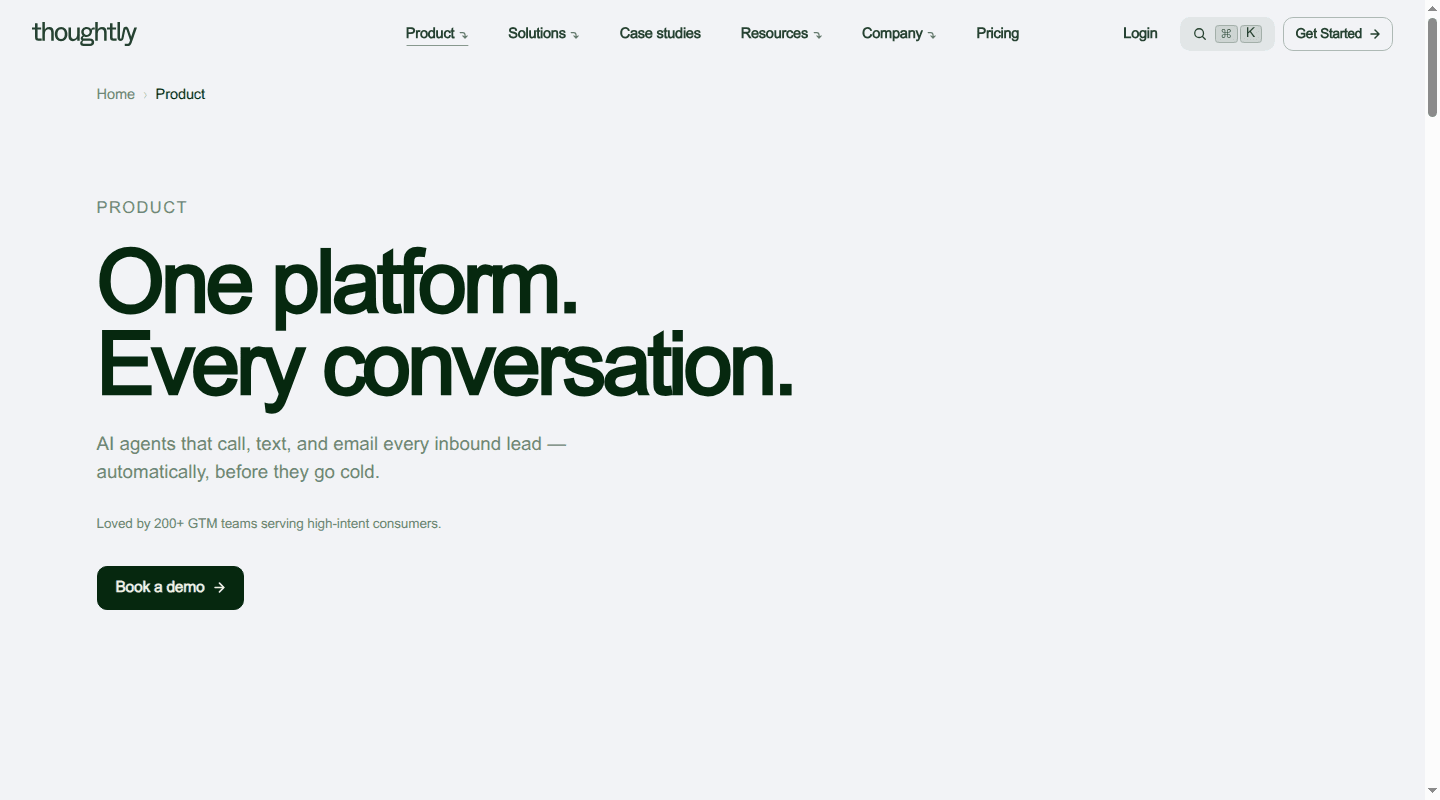
Thoughtly is built around an internal go-to-market workflow. Its Agent Builder gives nontechnical teams a node-based editor for messages, prompts, transfers, outcomes, variables, and mid-call actions. The broader product combines inbound and outbound voice with SMS, email, audiences, automations, conversation history, and two-way CRM sync.
That scope explains both its fit and the reasons teams compare alternatives. A product engineering team may want more runtime and provider control. A voice-first operation may not need Thoughtly's multichannel lead model. A release team may want automated evaluation on a self-serve tier. Procurement may also need a complete usage schedule before choosing a plan.
Thoughtly's Flex plan starts at $500 per month and lists unlimited voice, SMS, and email with 10 concurrent calls. The same pricing material says usage above monthly allowances is billed in arrears. The allowances and overage rates are absent, so the published terms cannot establish an effective price at 10,000 minutes or during a high-volume month. Scale and Enterprise require a quote.
Stay with Thoughtly when the shared lead journey is the main value, operations owns the workflow, its CRM connections fit your systems, and the complete quote works for your traffic. Switch only when another operating model creates enough value to pay back migration and retraining.
1. Dasha: best for technical teams building a voice AI product
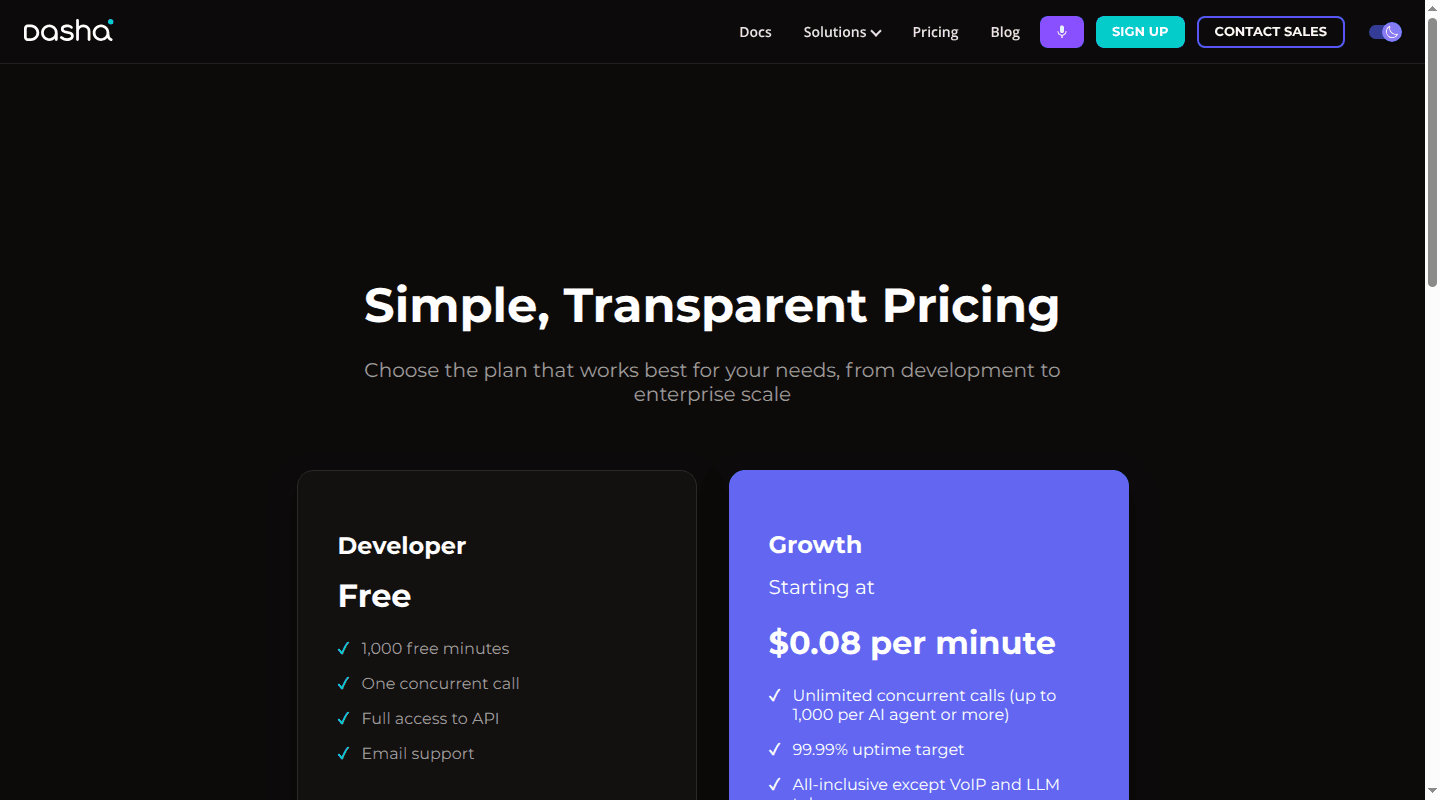
Best for: SaaS and product teams that want a managed production runtime with API, telephony, integration, and call-level operating paths.
We built Dasha for technical teams that need more control than a shallow hosted API without taking on the full burden of an open-source stack. You can configure agents through a web application or REST APIs, connect external systems through JSON Schema tools and webhooks, and run inbound or outbound calls through Twilio or manually configured SIP providers.
Production inspection is part of the same surface. Dasha call history exposes status, duration, transcripts, recordings, custom metadata, tool execution logs, model interactions, and performance details through the dashboard and API. This is useful when the buyer needs to embed voice into a product and debug the real call path rather than operate only a sales campaign.
Dasha pricing includes 1,000 minutes on the Developer offer. Growth starts at $0.08 per connected minute, billed to the second, excluding VoIP and large language model tokens. Failed connection attempts are not billed at the runtime layer.
Tradeoff: Dasha is a managed platform, so agent configuration, call APIs, inspection workflows, and the runtime are Dasha-specific. It supports multiple model and text-to-speech providers plus manually configured SIP, which separates some dependencies. A future move would still require you to translate agent configuration, tools, events, tests, and operational procedures. Dasha also expects engineering ownership for custom integrations and product logic. A team that only wants a visual multichannel CRM journey may prefer Thoughtly.
2. Retell AI: best for integrated hosted phone operations
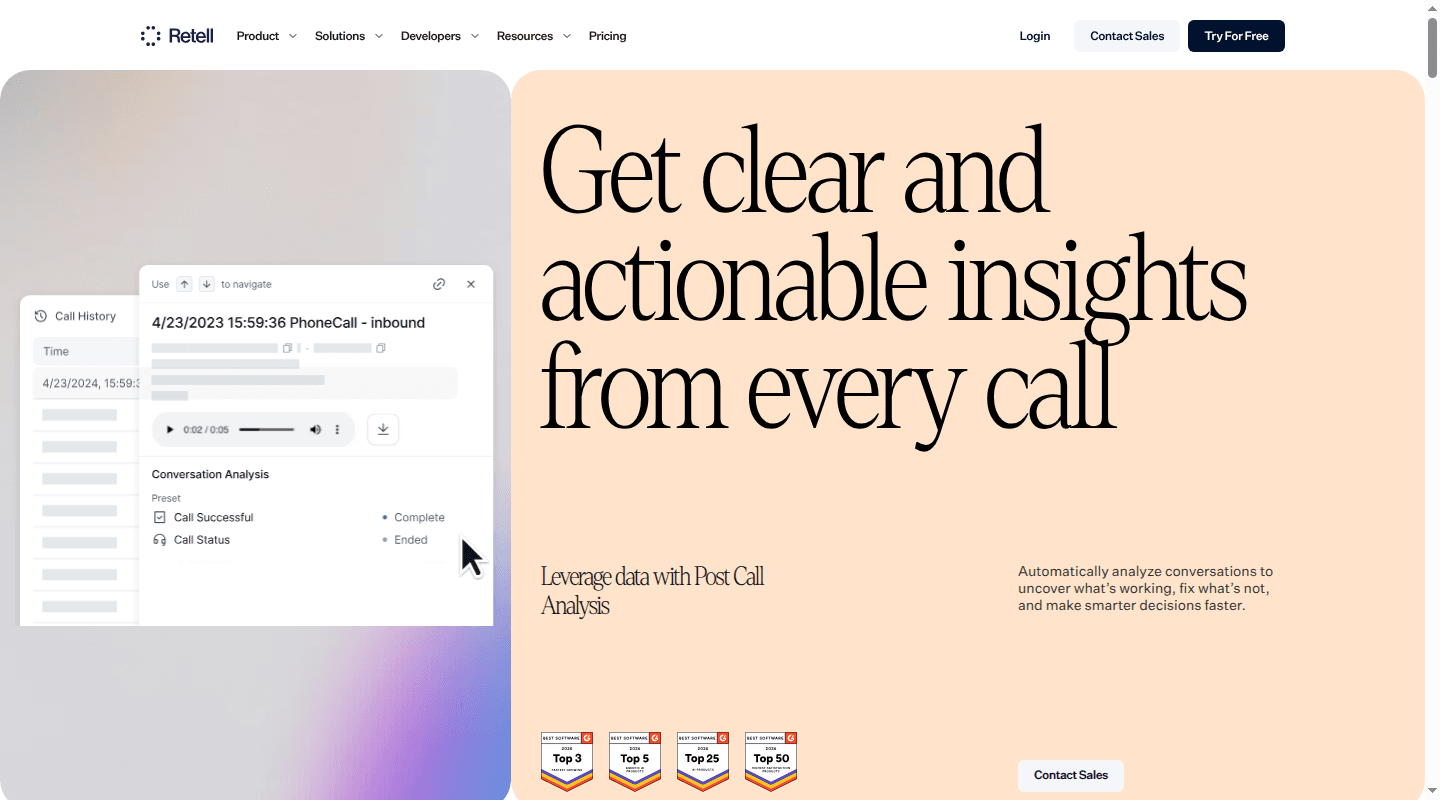
Best for: Teams that want visual call flows, telephony, testing, analytics, quality assurance, and live supervision in one hosted phone-agent platform.
Retell AI covers prompt-based agents and visual workflows, phone numbers and SIP, tools, outbound campaigns, transfers, simulation testing, post-call analysis, and live monitoring. It is a direct Thoughtly substitute when voice is the main channel and the operations team wants a broader set of phone-specific controls.
Retell's pay-as-you-go range is $0.07 to $0.31 per voice-agent minute. The pricing calculator separates voice infrastructure, text-to-speech, the language model, telephony, knowledge, denoising, safeguards, personal-data removal, and quality assurance. Twenty concurrent calls are included, and additional pay-as-you-go capacity is listed at $8 per concurrent call per month. The low end of the range is a component boundary, not a forecast for every production configuration.
Tradeoff: Retell can connect custom telephony and offers several voice and model choices, but its orchestration, workflow objects, simulations, monitoring, and post-call schemas remain platform-specific. Switching later means rebuilding more than the prompt. If you use your own SIP carrier, you may keep phone numbers and carrier contracts while replacing the agent layer.
Choose Retell when phone operations and visual supervision matter more than Thoughtly's coordinated email and messaging journey. Keep Thoughtly when its shared contact, CRM, and channel model is the core requirement.
3. ElevenLabs Agents: best when the voice layer leads the decision
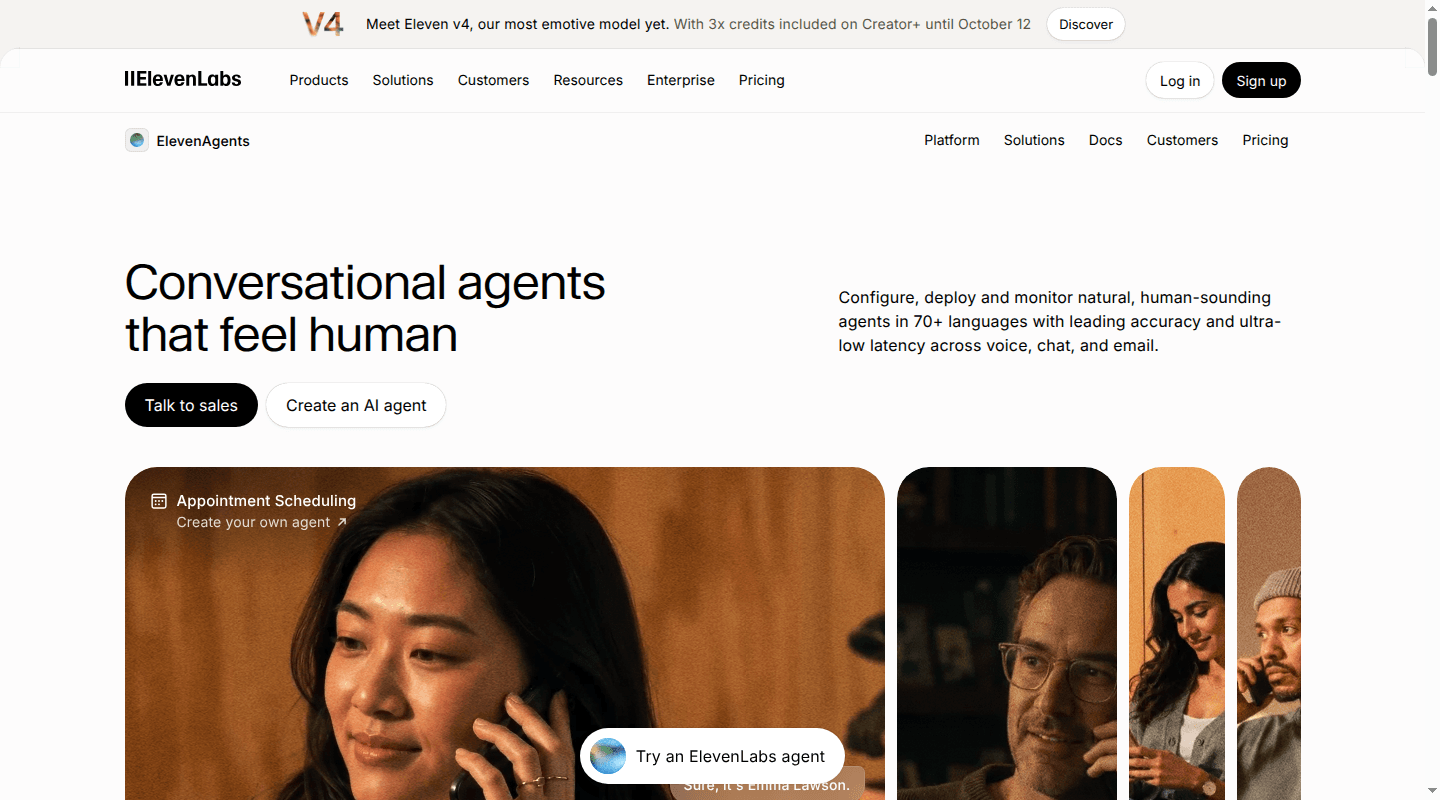
Best for: Products that want the ElevenLabs voice catalog, speech stack, and a managed agent runtime in one account.
ElevenLabs Agents combines agent configuration, knowledge, tools, phone or web deployment, testing, analytics, and its own speech and turn-taking layers. Its SIP trunking supports inbound and outbound calls through an existing phone system. Its agent testing supports next-reply checks, full simulated conversations, and regression cases made from production conversations.
Agent plans use subscription allowances for call minutes and concurrency. The Free plan includes 15 call minutes and four concurrent calls. Extra minutes are $0.08; calls above the plan's concurrency limit can use burst capacity at $0.16 per minute. Large language model use is separate. ElevenLabs adds no telephony fee, but an external carrier or SIP provider charges its own rate.
Tradeoff: The close link between speech, voice selection, turn-taking, and the agent runtime is the reason to choose ElevenLabs. It also widens the switching surface. Before moving, determine whether a cloned or licensed voice can be used elsewhere, then revalidate pronunciation, timing, interruption behavior, agent configuration, and tests. External SIP preserves more telephony control, while it does not make the speech runtime portable.
Choose ElevenLabs Agents when voice identity and a unified audio stack matter more than broad provider interchangeability. Thoughtly remains stronger for a revenue team whose workflow spans voice, messaging, email, and CRM activity.
4. Vapi: best for hosted component choice
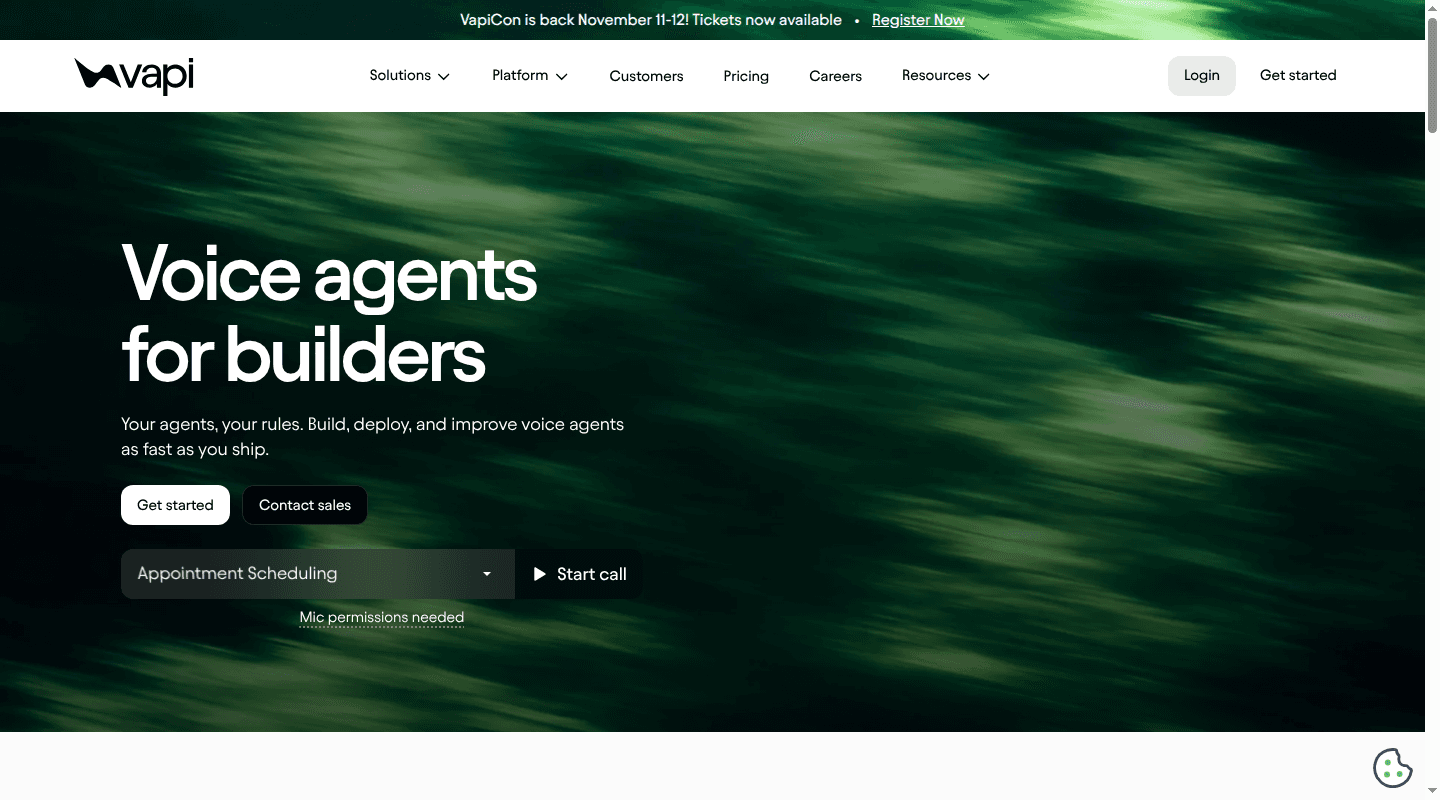
Best for: Developers who want hosted orchestration with a broad catalog of transcription, model, voice, and telephony options.
Vapi Assistants and Squads cover single-agent and multi-agent call paths. The platform supports APIs, SDKs, tools, custom model and speech endpoints, web calls, phone calls, and SIP providers. Its observability surface includes evals, simulations, versioning, scorecards, monitoring, structured outputs, and logs.
The usage-only entry path charges $0.05 per call minute for Vapi hosting and passes model charges through at cost. Transcription, language model, voice, and carrier costs sit outside that hosting fee. It includes $5 in initial credit, one phone number, four concurrent calls, and 14 days of raw data retention. Paid success packages change concurrency, retention, support, service-level terms, and fixed cost.
Tradeoff: Bringing provider keys or SIP reduces dependency at the component layer. Vapi still operates proprietary orchestration, so Assistants, Squads, tool definitions, events, evals, logs, and operating procedures need translation during a platform move. Provider portability lowers part of the switching cost; it does not turn hosted orchestration into a self-hosted runtime.
Choose Vapi when provider breadth and custom endpoints are central requirements. Choose Thoughtly when an operations-led CRM journey and coordinated outreach channels matter more than component choice.
5. Vocode: best for source-level control
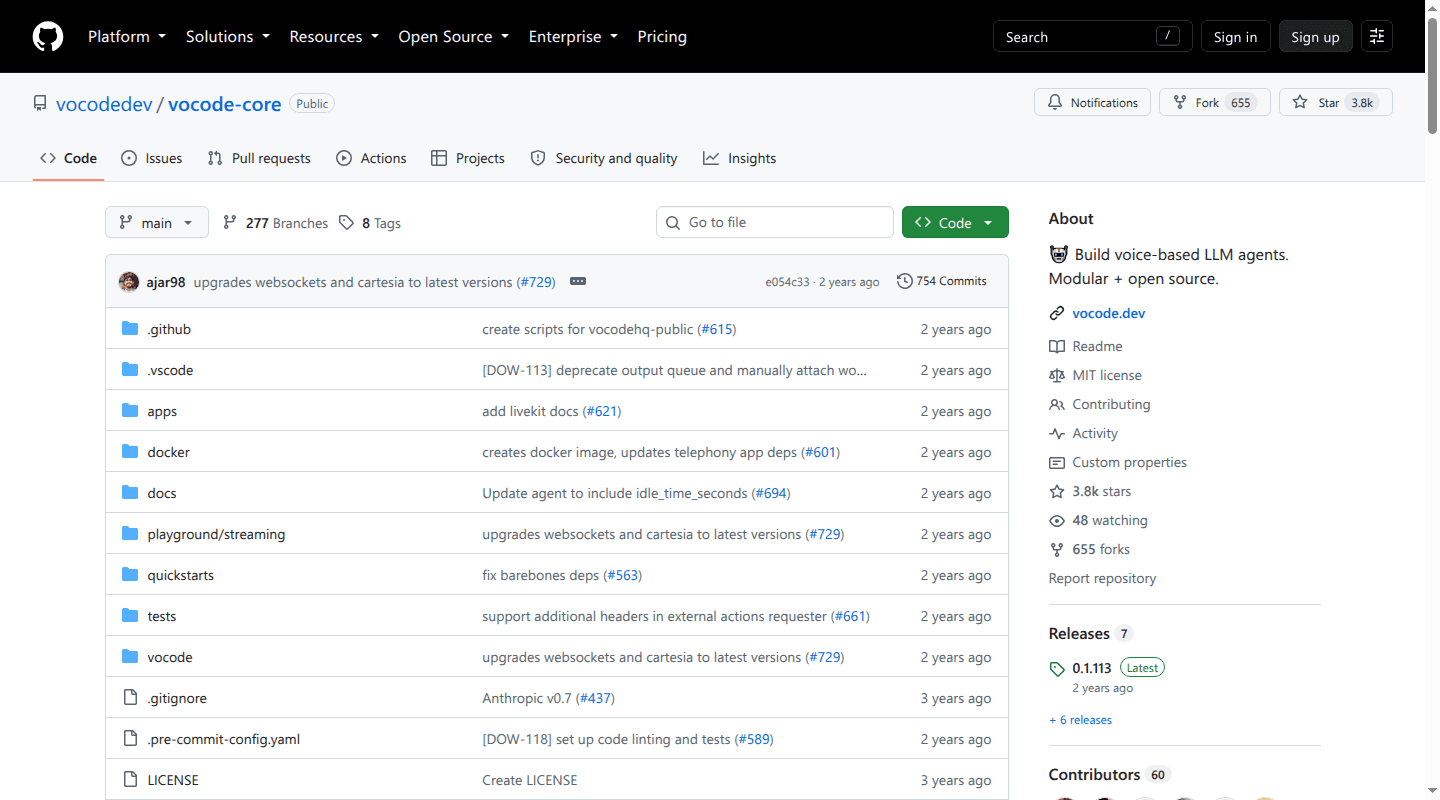
Best for: Python teams prepared to assemble, deploy, monitor, secure, and maintain their own real-time voice service.
Vocode Core is an MIT-licensed framework for streaming and turn-based voice applications. It offers abstractions for conversation orchestration, interruption handling, phone calls, web experiences, and integrations across several speech-to-text, model, and text-to-speech providers. Source access lets a team change the runtime itself rather than work only through a hosted platform's configuration model.
Vocode should not be compared with Thoughtly as if both were current hosted SaaS subscriptions. We could not verify a current hosted product or published hosted price. The repository also asks for community maintainers. That is a maintenance signal to investigate during technical due diligence, rather than proof that the framework is abandoned.
Tradeoff: The framework is free to license, while production is not free. Your team pays for hosting, telephony, transcription, models, speech synthesis, storage, monitoring, security, deployment, upgrades, and incident response. You also need to recreate Thoughtly's CRM actions, analytics, quality controls, campaign behavior, and user interface when those functions matter.
Choose Vocode when source control and a self-operated architecture are product requirements. Choose a managed alternative when the engineering time spent on runtime operations would distract from the application you are building.
Vendor dependency is a stack decision
Vendor lock-in is too broad to evaluate as one checkbox. Map each layer separately:
- Phone numbers and carrier: Customer-owned numbers on SIP or a bring-your-own-carrier connection are easier to repoint. Vendor-purchased numbers may require porting, and the destination must support the same call routes and identity controls.
- Speech and model providers: Customer-owned keys can preserve commercial relationships. They do not preserve provider-specific voice IDs, prompts, pronunciation controls, or timing behavior automatically.
- Agent logic: Visual nodes, agent configurations, tools, variables, transfer rules, and campaign objects use different schemas. Plan to translate and retest them.
- Data and operations: Export the history you are allowed to retain. Recreate analysis fields, dashboards, alerts, access controls, deletion rules, and runbooks.
- Testing: A vendor's simulation format rarely moves intact. Preserve representative calls, expected outcomes, tool failures, and known regressions as a platform-neutral acceptance set.
Vertical integration can reduce incident seams because one vendor owns more of the path. It also increases the surface you must replace later. A modular platform can make providers easier to swap, while your team owns more integration behavior. An open-source framework gives source access and transfers runtime operations to you.
How to choose a Thoughtly alternative
1. Decide whether you still need Thoughtly's channel model
List the journeys that cross phone, SMS, email, and CRM. A voice-first platform can be better at calls and still create a second system for follow-up. If email and messaging are peripheral, do not pay migration complexity to reproduce them.
2. Calculate loaded cost at your traffic shape
Use connected minutes, concurrent peaks, call attempts, transfers, model choice, speech choice, carrier routes, recordings, retention, evaluations, support, and compliance requirements. Fixed monthly pricing can favor steady high usage. Component pricing can favor small experiments and make forecasting harder.
3. Run one comparable production pilot
Use the same carrier route, workflow, tools, knowledge, failure conditions, and success criteria. Include noisy audio, interruptions, voicemail, transfer, slow tools, malformed tool results, long calls, and peak starts. Measure task completion and recovery alongside latency and cost.
4. Price the move itself
Inventory prompts, flows, tools, webhooks, CRM fields, numbers, knowledge, tests, recordings, dashboards, access controls, and staff training. Run the old and new paths in parallel for a bounded traffic slice, with a rollback route. A lower minute rate can lose money if the migration takes months or weakens conversion.
Frequently asked questions
What is the closest alternative to Thoughtly?
Retell AI is the closest option in this shortlist when the main job is an integrated hosted phone operation. It combines visual workflows, telephony, testing, analytics, and live supervision. No option here fully mirrors Thoughtly's voice, SMS, email, CRM, and revenue-workflow model, so define which parts you actually need to replace.
Is there an open-source Thoughtly alternative?
Vocode is the open-source framework in this shortlist. It supplies source-level conversation and provider abstractions, rather than Thoughtly's complete hosted operations workspace. Expect to build or integrate deployment, telephony, monitoring, analytics, CRM workflows, security controls, and support processes.
Which Thoughtly alternative is cheapest?
There is no defensible winner from headline prices. Dasha's and Retell AI's rates cover different component scopes. Vapi's $0.05 is a hosting layer. ElevenLabs uses subscription allowances and separate model or carrier charges. Vocode has no license fee but transfers infrastructure and engineering cost to you. Compare loaded cost for the same calls and outcomes.
Can I keep my phone numbers when switching from Thoughtly?
Often, if the numbers remain in your Twilio or Telnyx account and the destination supports a compatible carrier connection. Thoughtly's BYOC import keeps customer-owned numbers in that carrier account. Numbers purchased through a platform may need to be ported or replaced. Validate inbound routing, outbound identity, transfer behavior, emergency constraints, and rollback before moving production traffic.
When is Dasha a better fit than Thoughtly?
Dasha is the stronger fit when a technical team is embedding voice AI into a SaaS product or custom application and needs managed runtime execution, REST APIs, SIP control, tools, and call-level inspection. Thoughtly is the stronger fit when an internal revenue team wants a visual multichannel lead workflow with native CRM coordination.
Evaluate Dasha on your real call path
If you want a managed voice AI runtime with APIs, SIP connectivity, tools, testing, and production call inspection, evaluate Dasha's voice AI backend. Build one complete call path on the Developer offer, then run the same production acceptance set against another finalist before you move traffic.