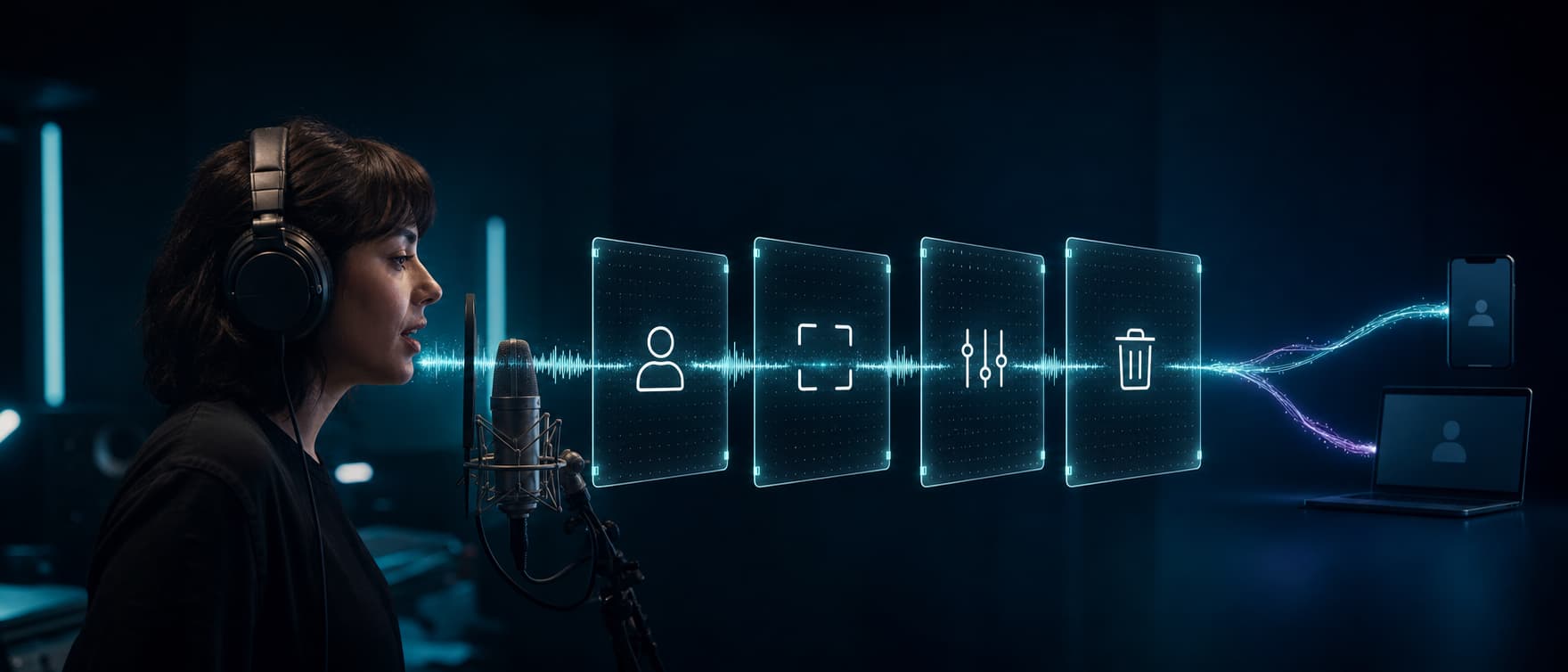
AI contract management can extract, compare, summarize, and route contract information, but a fluent answer is not an approved contract decision. A controlled pilot should test whether those capabilities shorten a specific workflow without weakening legal review, record authority, or audit evidence. Here is how to map AI to the contract lifecycle, evaluate tools, and run that pilot.
What AI contract management actually is
AI contract management applies machine learning and generative AI to contract work such as intake, drafting, review, redline comparison, search, obligation extraction, and renewal tracking. Contract lifecycle management (CLM) is the wider operating process, covering preparation and negotiation through execution, performance, renewal, or closure. World Commerce & Contracting uses that full-lifecycle definition.
An AI assistant can summarize a document or propose language. A CLM system governs versions, permissions, approvals, signatures, deadlines, and the official record. A reliable deployment needs both capabilities, connected to the systems where customer, supplier, and deal data already live.
Use one operating rule: the model can extract, classify, compare, summarize, and propose. An authorized person or a deterministic business rule decides what gets approved, signed, changed, disclosed, or executed.
We do not provide CLM or legal review. We fit where a team needs a real-time conversational channel for request intake, status communication, missing-information follow-up, or handoff into a governed contract system. Legal analysis and the contract record remain with qualified reviewers and the CLM.
Where AI fits across the contract lifecycle
The useful AI work changes at each stage. So does the required control.
| Lifecycle stage | Useful AI work | Control that keeps the workflow grounded |
|---|---|---|
| Request and intake | Classify the request, identify the contract type, collect required facts, and route work | Validate required fields against customer relationship management (CRM), procurement, or matter data before creating a request |
| Drafting | Select an approved template, populate deal terms, and propose clauses | Limit generation to counsel-approved templates and clause libraries; show every inserted source |
| Review and redlining | Summarize changes, compare language with a playbook, extract terms, and flag deviations | Cite the exact clause and document version; route material or ambiguous deviations to legal review |
| Negotiation and approval | Track open issues, suggest approved fallback language, and route approval requests | Keep decision rights in an approval matrix; never let the model grant an exception |
| Execution | Check completeness, route signatures, and confirm that the final file matches the approved version | Enforce signatory authority outside the model and lock the executed artifact as a distinct record |
| Repository and search | Tag agreements, link amendments, answer portfolio questions, and find related language | Search only authorized documents and identify the governing agreement, amendment chain, and source passage |
| Obligations, renewal, and closure | Extract dates and commitments, create reminders, detect upcoming notice windows, and prepare closure tasks | Assign an owner, due date, evidence requirement, and escalation path to every operational obligation |
This mapping prevents a common design error: treating the PDF as the whole workflow. A contract request also has an owner, counterparty, approval state, negotiation history, related deal, executed version, amendments, obligations, and access policy. AI needs that context to be useful, while the surrounding system must remain authoritative.
Five layers of a governed contract workflow
A production design is easier to evaluate when its responsibilities are separated.
| Layer | Responsibility | Example |
|---|---|---|
| Source of truth | Holds approved facts and authoritative artifacts | Executed contract, amendments, clause library, CRM opportunity, supplier master, approval matrix |
| Contract intelligence | Reads, extracts, compares, retrieves, and drafts | Clause extraction, playbook comparison, semantic search, summary, proposed fallback |
| Workflow and policy | Controls state changes and decision rights | Assignment, approval routing, signature authority, escalation, renewal task |
| Interaction | Lets people request and receive work | CLM interface, email, chat, API, or voice conversation |
| Audit and evaluation | Records what happened and measures quality | Document version, model and prompt version, cited passage, output, reviewer decision, final action |
The AI layer should produce typed proposals rather than silently edit business records. For example, a model may return:
- clause type: limitation of liability;
- extracted cap: two times annual fees;
- playbook position: one times annual fees;
- confidence: below the review threshold;
- cited location: section 11.2 of vendor draft version 4;
- proposed next state: legal review required.
The workflow layer checks permissions and routes the proposal. A reviewer decides whether the clause is acceptable. The audit layer preserves the model output, source passage, reviewer action, and final language.
This structure also contains failure. If extraction is wrong, the signed contract remains unchanged. If a reviewer overrides the playbook, the approval record explains who did it and why.
Practical use cases by team
AI contract management serves different jobs across legal, procurement, and revenue operations. One generic assistant rarely fits all three.
Legal operations
- Run first-pass review against an approved playbook.
- Compare redlines and surface only material changes.
- Find governing language across a master agreement and its amendments.
- Extract recurring terms for portfolio analysis.
- Route deviations by clause type, risk level, business unit, and approval authority.
Legal owns the playbook, escalation policy, and final judgment. Treat reduced document handling as a pilot hypothesis. Measure reviewer touches and handling time alongside missed issues, overrides, and unresolved exceptions.
Procurement
- Collect supplier, service, data-access, spend, and term details at intake.
- Compare supplier paper with approved positions.
- Extract renewal, notice, service-level, insurance, and pricing obligations.
- Connect contract milestones with supplier records and procurement tasks.
- Identify agreements that need review before a pricing or renewal window closes.
Procurement needs contract data to become assigned work. An extracted renewal date without an owner, reminder, and source clause is only another field to ignore.
Sales and revenue operations
- Start a request from complete CRM data instead of another email thread.
- Generate standard agreements from approved templates.
- Show status without exposing confidential legal comments.
- Collect missing commercial facts and schedule follow-up.
- Route nonstandard payment, liability, data, or term requests to the right approver.
Sales teams need a fast path for standard deals and an explicit exception path. The model should not decide that an unusual term is “close enough.”
Risks to control before rollout
Contracts combine confidential data, legal judgment, financial commitments, and long-lived obligations. That makes plausible output an insufficient quality standard.
Incorrect extraction, omission, or invented language
Generative models can present false output confidently. The National Institute of Standards and Technology generative AI risk profile calls this confabulation and highlights the risk in consequential, context-heavy domains.
Contract systems also fail through omission. A summary may accurately describe five obligations while missing the sixth. Measure whether the system found every required item, not only whether the items it returned look correct.
Controls should include exact source citations, explicit “not found” states, confidence thresholds, amendment-aware retrieval, and reviewer sign-off for legal substance. Never replace a missing value with a likely value.
Confidentiality, privilege, and data use
Before sending contracts to any model or service, define which documents and fields it can receive, where data is processed, how long it is retained, whether it is used for training, which subprocessors can access it, and how deletion works. Permissions must apply to retrieval as well as the user interface. A user who cannot open a contract should not receive its clauses through AI search.
Privilege needs a separate control from general confidentiality. Attorney-client communications and attorney work product may enter prompts, retrieved context, outputs, traces, support logs, or evaluation datasets. Sending that material to a model provider or connector can create third-party disclosure and waiver questions. The outcome depends on the facts and applicable law, so counsel should decide which privileged material may enter each service, for what purpose, under which access, retention, and contractual protections. Keep privileged material out of broadly accessible knowledge bases and test sets.
For U.S. lawyers, American Bar Association Formal Opinion 512 connects generative AI use with duties including competence, confidentiality, supervision, communication, and independent review. An ABA-published privilege analysis explains why disclosure to a generative AI service raises a fact-specific waiver question. Other jurisdictions and professional rules differ, so qualified counsel should set the applicable policy.
Untrusted document content
Treat uploaded contracts and attachments as untrusted data. Text inside a document must not be allowed to alter system instructions, expand permissions, select a new tool, or authorize an action. This matters when AI can call a CLM, CRM, email, calendar, or e-signature API.
Keep retrieval separate from action. Validate every action against authenticated identity, tenant, record state, and business policy. Require explicit approval before sending language to a counterparty, changing an obligation, or triggering signature.
Version and amendment errors
The latest file is not always the governing agreement. A master services agreement, statement of work, order form, addendum, and later amendment may each control different terms.
The repository needs document relationships, execution status, effective dates, precedence rules, and supersession metadata. An AI answer should identify the exact artifacts it used. If the system cannot resolve a conflict, it should create a review task instead of choosing one version.
Weak audit evidence
A chat transcript alone does not prove a controlled review. Preserve the input document hash or version, retrieved passages, model and prompt version, structured output, tool calls, reviewer identity, approval, final artifact, and downstream action.
That evidence supports incident review, quality measurement, and later disputes about how a term entered the agreement.
How to evaluate AI contract management software
Start with the workflow boundary. Some tools draft clauses. Others specialize in extraction or review. A CLM may combine repository, workflow, e-signature, reporting, and AI. Buying one category while expecting another creates expensive gaps.
Use these questions during evaluation:
- What is authoritative? Can the tool distinguish executed agreements, drafts, amendments, templates, and playbooks?
- Can every output show evidence? Require an exact source passage, document name, and version for extraction, comparison, and search answers.
- How are omissions represented? “Not found,” “not applicable,” and “uncertain” need different states.
- Can policy be enforced outside the prompt? Approval limits, access rules, and signatory authority belong in deterministic controls.
- Does it handle document relationships? Test a master agreement with several order forms and conflicting amendments.
- How does security map to your data? Review tenant isolation, role-based access, encryption, retention, deletion, training use, subprocessors, data location, and audit export.
- Can it integrate with existing systems? Check the CLM, CRM, enterprise resource planning, procurement, identity, email, calendar, e-signature, and data warehouse paths you actually use.
- Can your team export its records? Contracts, metadata, approval history, extracted fields, and audit events should remain available if you migrate.
- How is quality measured after release? Look for versioned test sets, field-level metrics, reviewer feedback, drift monitoring, and rollback or disable controls.
A polished demo on one clean contract does not answer these questions. Use your own document types, including poor scans, unusual clauses, missing schedules, long exhibits, handwritten changes, and amendment chains.
A controlled implementation sequence
1. Choose one bounded workflow
Start with a frequent task that has an agreed playbook and clear owner. Good candidates include standard nondisclosure agreement intake, supplier renewal extraction, or first-pass review of a common order form. Avoid starting with the rarest and most negotiated agreement.
2. Map decision rights
List who may request, view, draft, approve, sign, amend, and close each contract type. Define which outcomes a rule may handle automatically and which require legal, finance, security, procurement, or executive approval.
3. Prepare the evidence base
Separate approved templates from old examples. Link amendments to governing agreements. Normalize contract types and metadata. Remove duplicate or unsigned artifacts from the authoritative collection. A larger repository does not help if the system cannot identify which version governs.
4. Build a representative test set
Have qualified reviewers label the fields, clauses, deviations, and expected escalation for real document patterns. Include easy, ambiguous, missing, and conflicting cases.
Measure by task:
- extraction: precision, recall, exact match, and omission rate;
- review: false negatives by clause type, false positives, and reviewer changes;
- search: source support, governing-version accuracy, and access-control compliance;
- workflow: routing accuracy, approval completion, cycle time, and unauthorized-action count.
One overall “accuracy” score hides the failure that matters.
5. Configure controls and integrations
Connect only the systems and fields required for the pilot. Apply least-privilege credentials, input and output schemas, approval gates, timeouts, retries, and audit events. Keep write access disabled until the read-only path performs reliably.
6. Run in shadow mode
Let the system produce classifications, extractions, or proposed redlines while people follow the existing process. Compare outputs without allowing AI to alter a record or contact a counterparty. Review misses by failure type, then update the playbook, retrieval, or workflow.
7. Release gradually and monitor exceptions
Move one contract type or business unit at a time. Track reviewer overrides, missed clauses, unsupported answers, access denials, failed integrations, and obligations that were created without a usable owner. Re-test when the model, prompt, playbook, document parser, or connected system changes.
Where Dasha fits in the contract stack
We add phone or web conversations around an existing contract workflow. Our managed runtime, REST APIs, web application, and business-tool connections let technical teams build production voice AI agents without turning the voice channel into the contract system of record. Our current product documentation shows how to configure authenticated external API tools and warm transfers for a human handoff.
Credible contract workflow uses include:
- collecting request details and creating a structured intake record;
- running a customer-configured identity workflow before sharing an approved status;
- retrieving a milestone from the authorized CLM or CRM;
- following up for missing business information;
- scheduling a conversation with the assigned reviewer; and
- transferring disputes, negotiations, or policy exceptions to a person.
The action boundary matters. Authorization belongs in the connected business tool, legal interpretation stays with qualified reviewers, and the conversational agent receives only the data needed for that interaction. Our guide to the AI agent runtime explains how identity, tools, state, approvals, and audit records fit around model output.
Worked example: a verified contract-status call
Consider a Dasha voice agent configured for contract request intake and status questions. This is a customer-configured workflow. Dasha carries the conversation and invokes permitted tools. It does not establish the caller's identity, decide CLM permissions, or become the authority for the contract.
- Intake input: The caller provides a request number and says they need the status of a vendor nondisclosure agreement. For a new request, the agent collects the counterparty name, contract type, business owner, needed-by date, and a short purpose. It rejects free-form instructions to approve terms or bypass review.
- Configured identity check: The agent asks for a one-time code sent through the customer's identity service. It calls a customer-owned
verify_callertool with the request number, code, and an immutable account identifier supplied in call metadata. A configured identity workflow, rather than Dasha alone, determines whether verification succeeds. - Authorized lookup: After a successful check, a read-only
get_contract_statustool uses scoped credentials to query the authorized CLM record. If deal context is required, a separate read-only CRM tool returns only the opportunity fields allowed for that caller. The agent states the returned status and assigned reviewer without exposing legal comments. - Action boundary: The agent may submit a structured draft intake or schedule a callback. It cannot approve a clause, accept risk, change the contract, disclose privileged notes, send language to the counterparty, or start signature. Those actions remain behind CLM permissions and approval rules.
- Human legal handoff: A request to accept a nonstandard liability cap triggers a warm transfer to the assigned legal reviewer. The handoff includes the verified caller identity, request number, collected facts, and question. It excludes restricted legal notes.
- Failure path: If the code fails, the CLM returns more than one record, the tool times out, or the caller asks for a prohibited action, the agent discloses no status and makes no write. It records the failure category and offers the approved legal-operations callback path. A failed transfer follows the configured fallback, such as scheduling a callback without adding legal conclusions.
This boundary is testable. The pilot should verify that no lookup occurs before identity success, every tool uses the caller's authorized scope, prohibited actions generate no write, and each exception reaches the correct human queue.
Frequently asked questions
Can ChatGPT review a contract?
A general-purpose model can summarize language, extract stated terms, or propose questions for a reviewer. It does not establish which document governs, which playbook applies, who can approve an exception, or whether its answer is legally sound. Confidential contracts should only enter an approved environment with defined data handling, access controls, source evidence, and qualified review.
Is AI contract management the same as CLM?
No. AI contract management describes capabilities such as extraction, comparison, drafting, and search. CLM is the process and system that manages requests, versions, approvals, execution, obligations, renewals, and records. AI can sit inside a CLM or connect to one.
Which contract should a team automate first?
Choose a common, lower-complexity contract type with an approved template, stable playbook, enough historical examples, and clear escalation rules. The best first workflow has measurable volume and a reviewer who can label errors and own improvements.
Will AI replace contract managers or lawyers?
A controlled pilot can test whether AI reduces document handling or surfaces issues earlier for one defined workflow. People still own negotiation strategy, risk acceptance, legal interpretation, approvals, relationships, and accountability. Measure those proposed gains against missed issues, reviewer overrides, and unauthorized actions before changing roles or service levels.
If your governed contract workflow needs a real-time voice layer for intake, status, or follow-up, evaluate Dasha's voice AI backend on one controlled workflow.