
AI cold calling software now describes several different products. Some agents hold the conversation, some dial until a human prospect answers, and others only analyze calls. Choosing the wrong category creates a costly mismatch before voice quality, integrations, or pricing enter the discussion. A useful evaluation separates the main operating models, compares eight credible options, and shows what each buyer should prove before committing to a platform.
The short answer
For a technical team building an autonomous outbound calling product, Dasha is our recommended choice. We provide the managed voice runtime, outbound execution, telephony, tools, transfers, testing, and call inspection while your team controls the workflow and customer experience.
The other choices solve different jobs:
- Synthflow suits enterprises that want a visual builder and a vendor-led deployment.
- Bland AI offers a direct route to self-serve batch campaigns with bundled voice AI pricing.
- Retell AI combines visual workflows, application programming interfaces (APIs), campaigns, and managed voice components.
- Vapi gives developers wide provider choice and an API-first way to compose the voice stack.
- Autocalls packages no-code agents, campaigns, integrations, and agency features in one subscription.
- Orum is the pick when a human sales representative should speak after an AI dialer finds a live prospect.
- CloudTalk combines a cloud phone system, multiple human-led dialer modes, and optional AI conversation analysis.
There is no honest universal winner. The right shortlist begins with who should talk on the call and who will operate the system after launch.
Three products share the same label
An AI cold calling tool can automate three very different parts of outbound sales:
| Product type | Who speaks to the prospect? | What the AI does | Best fit |
|---|---|---|---|
| Autonomous voice agent | AI | Holds the conversation, qualifies, books, updates systems, and transfers | Bounded, repeatable conversations with clear rules |
| AI dialer | Human | Dials several numbers, detects a live answer, drops voicemail, and logs activity | Sales development teams that want more live conversations per rep |
| Conversation intelligence | Human | Prepares context, transcribes, summarizes, scores, or coaches | Teams that want better calls while keeping their current phone system |
Gong, Fireflies.ai, and many sales coaching products can improve cold calls, but they do not replace the caller. An autonomous voice platform can place and handle the call. Orum accelerates a human caller. Treating them as interchangeable makes feature and price comparisons meaningless.
Best AI cold calling software compared
| Platform | Who talks? | Best fit | Pricing boundary |
|---|---|---|---|
| Dasha | AI | Technical teams building a custom production agent or SaaS product | Developer plan is free with 1,000 minutes and one concurrent call; Growth starts at $0.08/minute before telephony and large language model (LLM) tokens |
| Synthflow | AI | Enterprise operations teams that want a visual workflow and implementation support | Enterprise contracts start at $30,000 annually; final price depends on volume, concurrency, telephony, integrations, and support |
| Bland AI | AI | Self-serve batch campaigns with a bundled voice AI rate | Start costs $0.14/minute with no platform fee; Build costs $299/month plus $0.12/minute; telephony is separate |
| Retell AI | AI | Teams that want visual flows plus APIs and managed voice components | Pay as you go is $0.07 to $0.31/minute depending on the model and voice, with telephony and add-ons separate |
| Vapi | AI | Developers composing their own model, speech, voice, and carrier stack | Free entry package, then $0.05/minute for hosting; model, speech, voice, and telephony usage pass through separately |
| Autocalls | AI | Small businesses and agencies that want campaigns with minimal engineering | Month-to-month Starter is $34 with 120 minutes; higher tiers add campaigns, concurrency, minutes, and agency features |
| Orum | Human | Sales teams that want an AI parallel dialer | Custom pricing |
| CloudTalk | Human | Sales teams that want phone service, several dialer modes, and optional conversation intelligence | Lite starts at €19/user/month billed annually; Power Dialer, Parallel Dialer, and AI Conversation Intelligence have separate plan or add-on costs |
These rates have different boundaries. A bundled rate and a platform-only fee cannot be compared as if they buy the same minute. The loaded cost also includes telephony, models, speech services, transfers, phone numbers, recording, storage, support, and engineering. For human-led dialers, include the base seat, dialer mode, AI add-ons, and calling plan.
1. Dasha: recommended for custom production agents
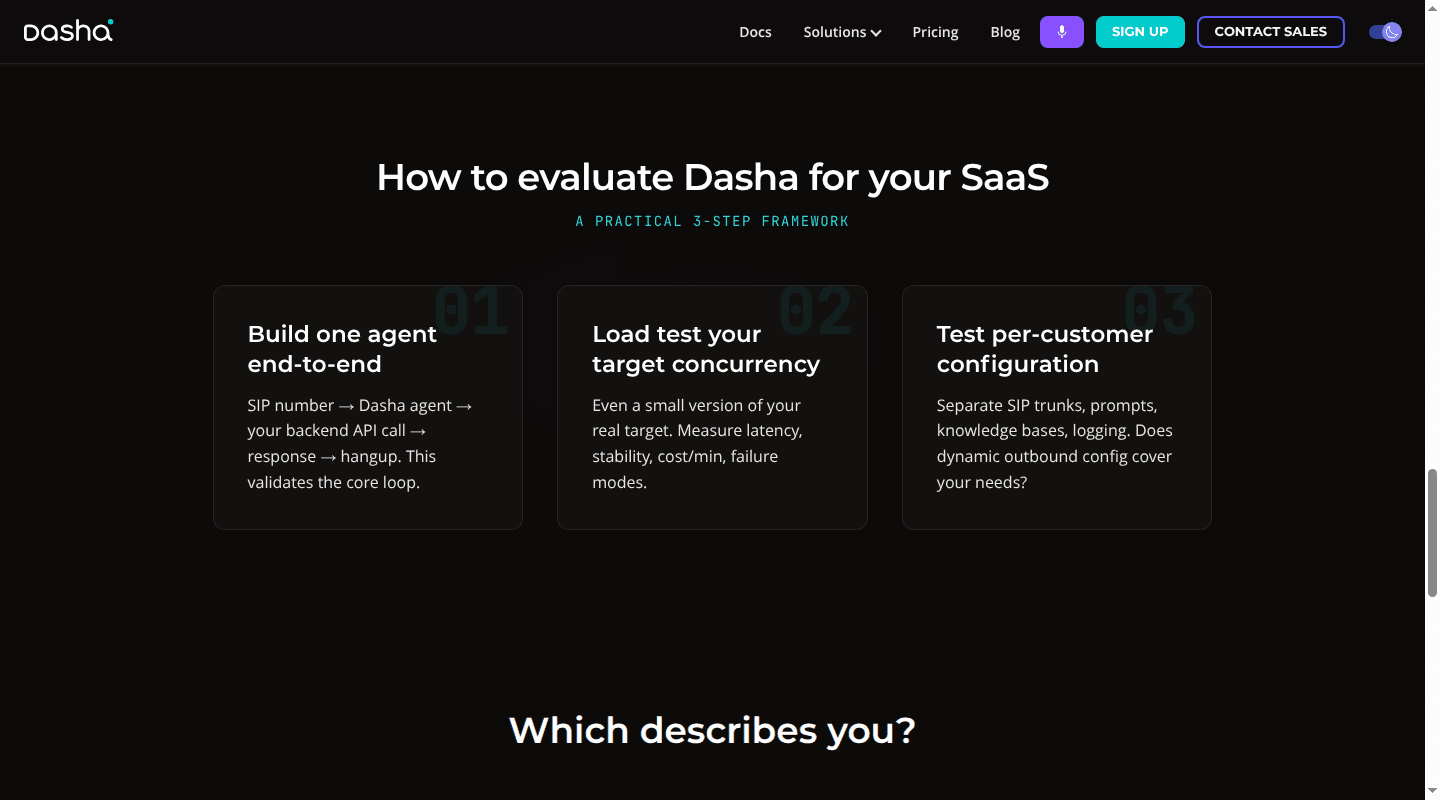
Dasha helps technical teams build and run production voice AI agents through a managed runtime, REST APIs, and a web application. For outbound work, the platform can schedule calls, set campaign-specific data, use tools to read or write approved systems, and transfer an interested prospect to a person. Call Inspector brings the transcript, recording when enabled, model activity, tool calls, events, and latency onto one timeline.
This model is a strong fit when cold calling is part of a product or a controlled operating workflow. Your application can decide which records are callable, select the agent and phone configuration, pass account context, and process outcomes through webhook events. Dasha runs the real-time conversation and call execution.
It requires engineering. Dasha does not provide prospect lists, a turnkey sales engagement workspace, or a ready-made agency portal. Teams that only want to upload a spreadsheet and launch from a no-code dashboard will get to a first campaign faster with Autocalls or Bland AI.
The free Developer plan includes 1,000 minutes and one concurrent call. Growth starts at $0.08 per minute, excluding VoIP and LLM token costs. The Dasha voice AI backend is the best starting point for architecture and feature fit.
2. Synthflow: for enterprise teams that want visual workflows
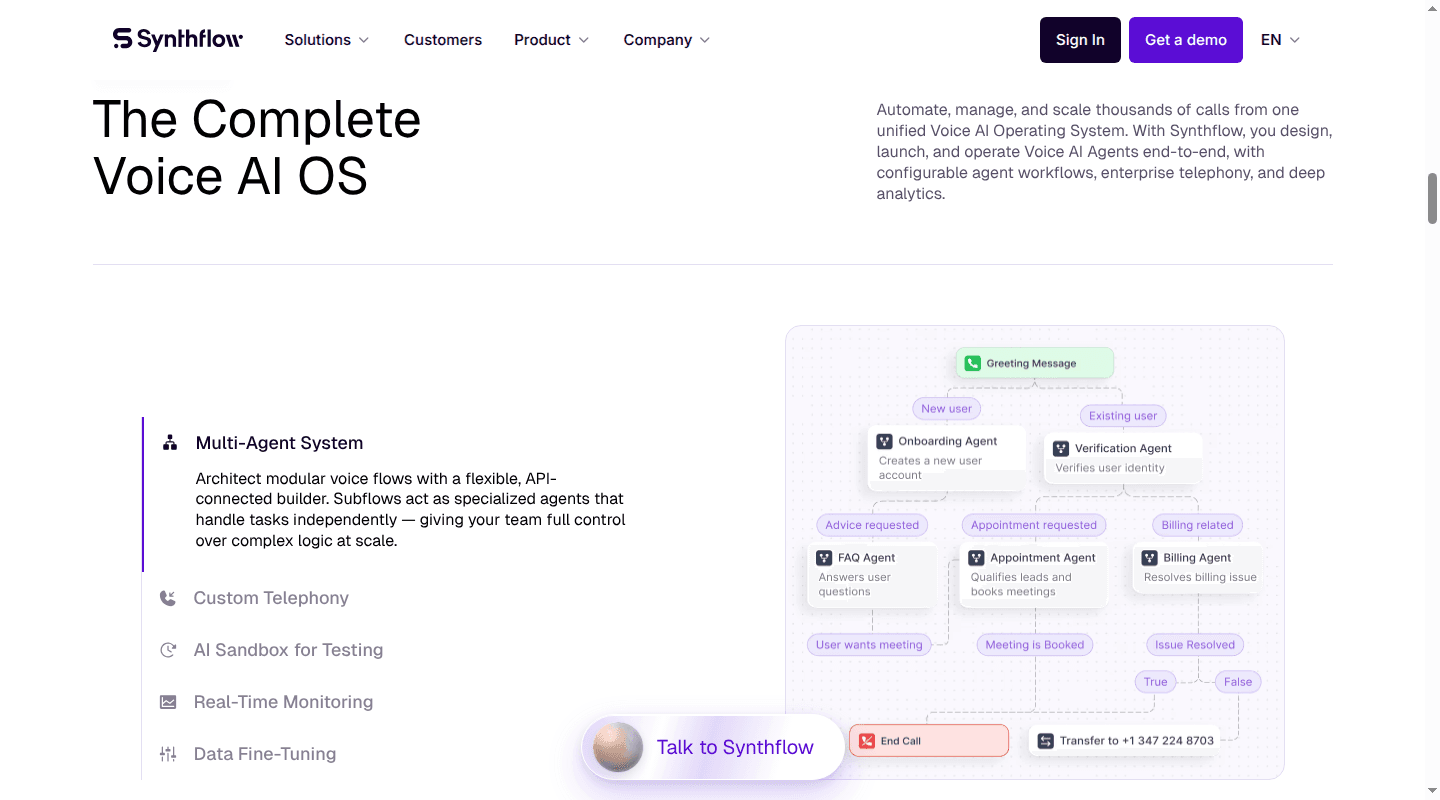
Synthflow combines a visual flow designer, telephony, integrations, simulations, versioning, monitoring, and automated quality analysis. Its batch calling controls support calling windows, schedule control, dialing speed, and recipient outcomes. Warm transfers can hand a live conversation to a person.
The platform now centers enterprise deployment. Contracts start at $30,000 annually, with scope based on call volume, concurrency, telephony, integrations, security, and launch support. That model fits an operations or contact-center program that wants one vendor involved from workflow design through rollout.
The tradeoff is commercial and architectural commitment. Workflow logic, campaign operations, analytics, and telephony can all sit inside the same platform. A future move can involve recreating several layers at once. Teams should account for that dependency when they value the speed of an integrated system.
3. Bland AI: for self-serve batch campaigns
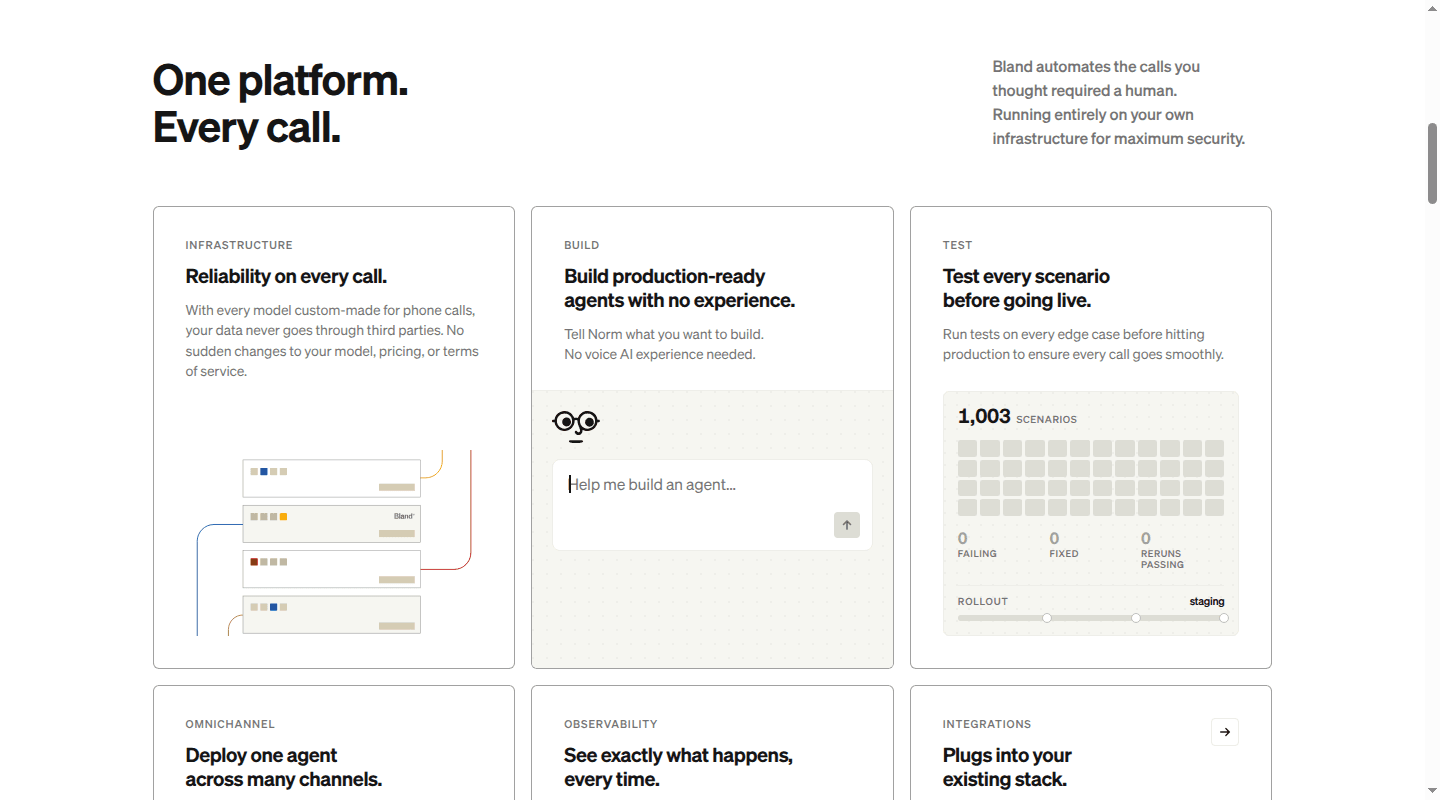
Bland AI supports agents built with prompts or visual pathways, CSV-based batch calls, per-recipient variables, tools, status webhooks, and warm transfers. Its batch call workflow is direct: upload recipients, map data into the agent, dispatch the campaign, and monitor each call from a central dashboard.
The pricing boundary is easier to read than a bring-your-own-model stack. Start costs $0.14 per connected minute, includes 10 concurrent calls, and caps activity at 100 calls per day. Build costs $299 per month plus $0.12 per minute, with 50 concurrent calls and 2,000 calls per day. Model and speech costs are included. Telephony remains a separate pass-through or bring-your-own-carrier cost.
Bland is useful when a team wants batch mechanics without assembling speech and model providers. Its lower self-serve tiers also impose daily and concurrency limits, so bursty campaigns need capacity planning. Teams that want each customer to use a different model or speech provider will have more provider-level control with Vapi.
4. Retell AI: for a managed stack with visual and API control
Retell AI covers visual call flows, APIs and software development kits, phone numbers, outbound calls, scheduled batch campaigns, voicemail handling, transfers, webhooks, call analysis, and simulations. A team can begin in the dashboard and extend the same deployment through code.
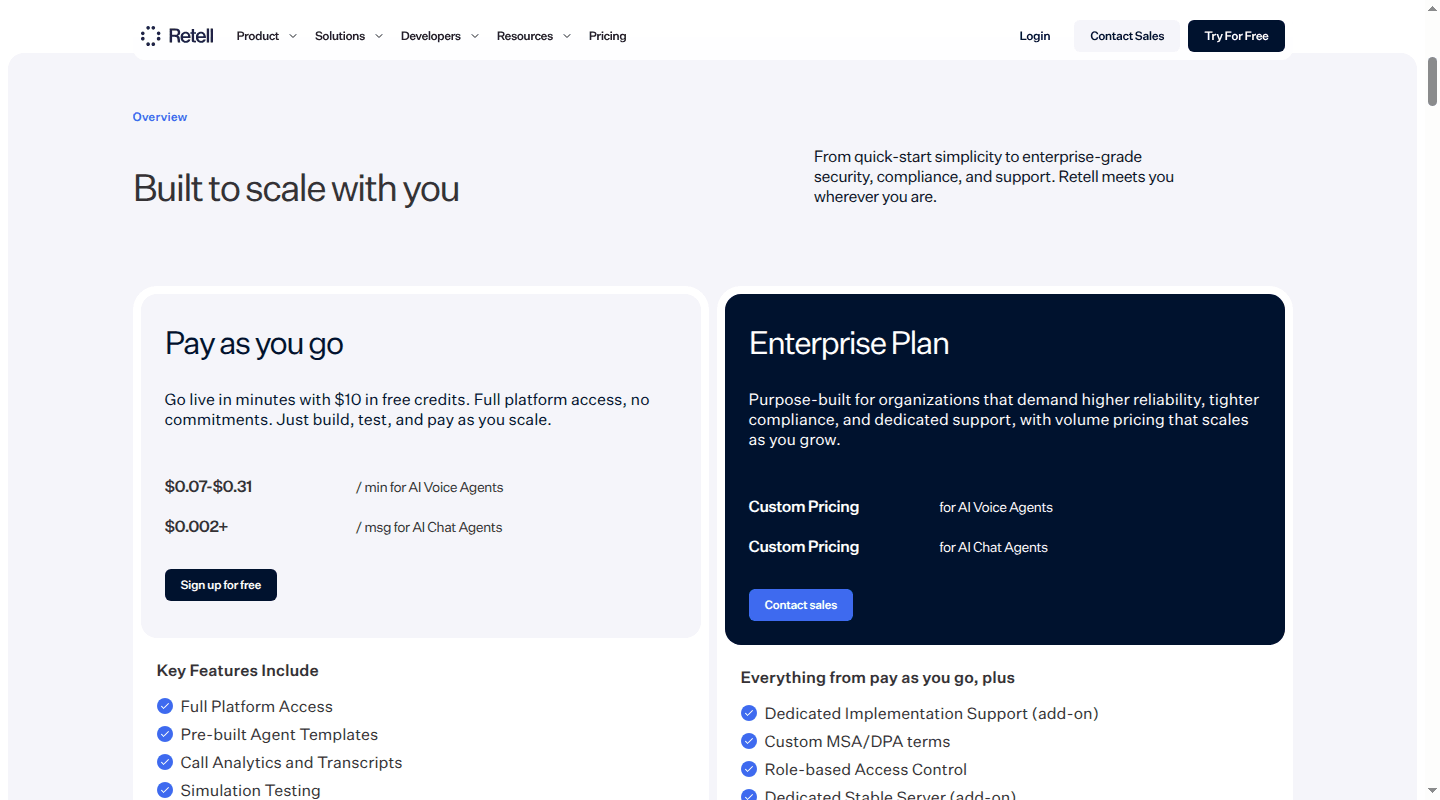
Pay-as-you-go voice agents cost between $0.07 and $0.31 per minute. The total depends on the LLM and text-to-speech voice. Telephony and optional features can add to that figure. The entry plan includes 20 concurrent calls and $10 in usage credits.
Retell fits teams that want more application control than a turnkey campaign product and more managed components than a fully assembled provider stack. Its quality assurance, analytics, speech, and workflow features create a broader operating surface inside Retell. That simplifies procurement and operations, while making those components part of a later migration plan.
5. Vapi: for developers who want provider choice
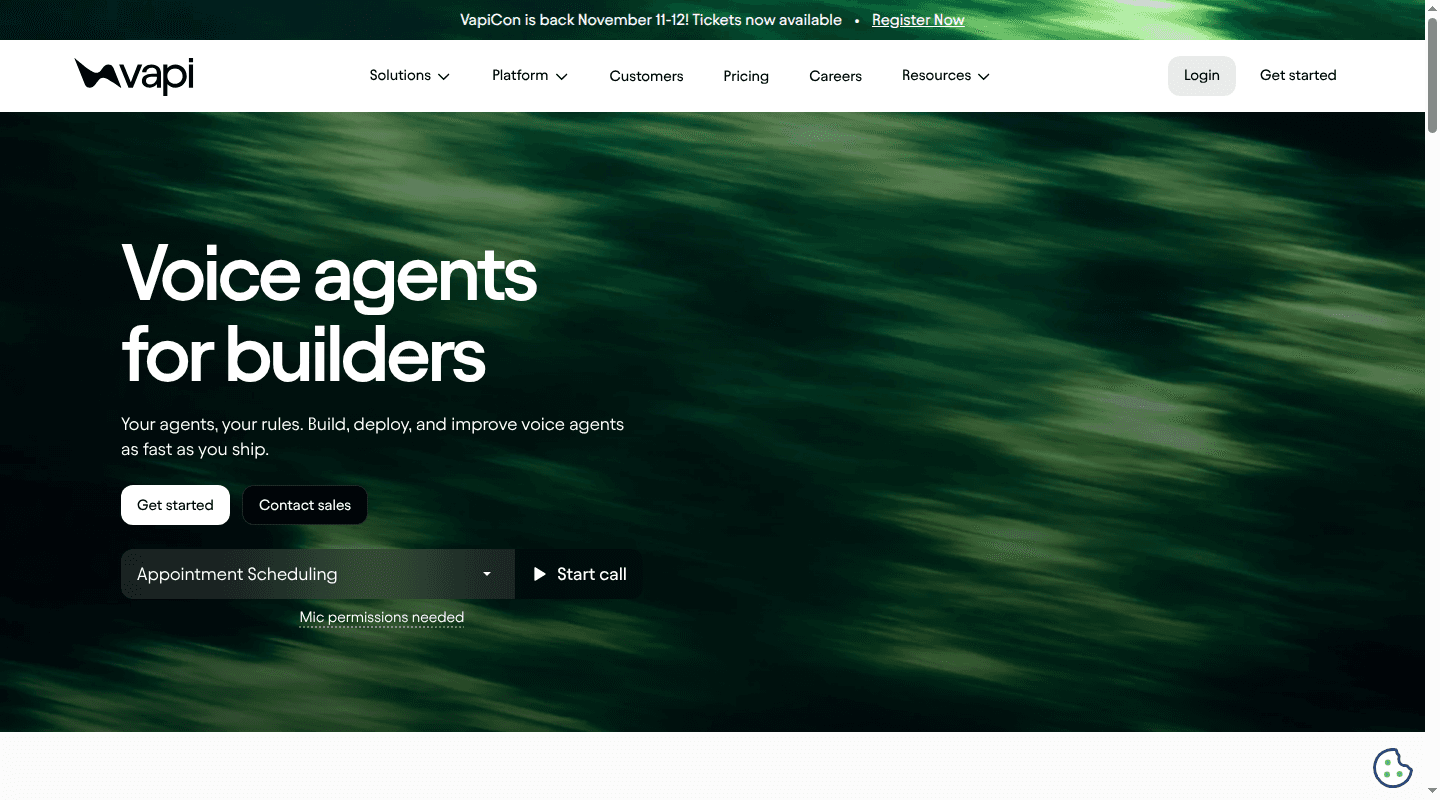
Vapi is an API-first voice agent platform with a configurable transcriber, LLM, voice, and telephony layer. Outbound calls can run individually or in batches, and scheduled calls can pin a published assistant version. The platform also supports tools, transfers, call monitoring, and outbound campaigns from the dashboard.
The free package includes four concurrent calls. Paid usage adds a $0.05-per-minute hosting fee, while the selected speech recognition, model, voice, and telephony providers charge separately. A $29 monthly Builder package raises included limits, and higher production packages add retention, organizations, and support.
This structure helps developers change one provider without replacing the whole application layer. It also creates more billing and failure boundaries. A delayed response could originate in telephony, transcription, the model, synthesis, a tool, or orchestration. Vapi is a good fit when provider choice matters enough to justify that operating work.
6. Autocalls: for turnkey campaigns and agencies
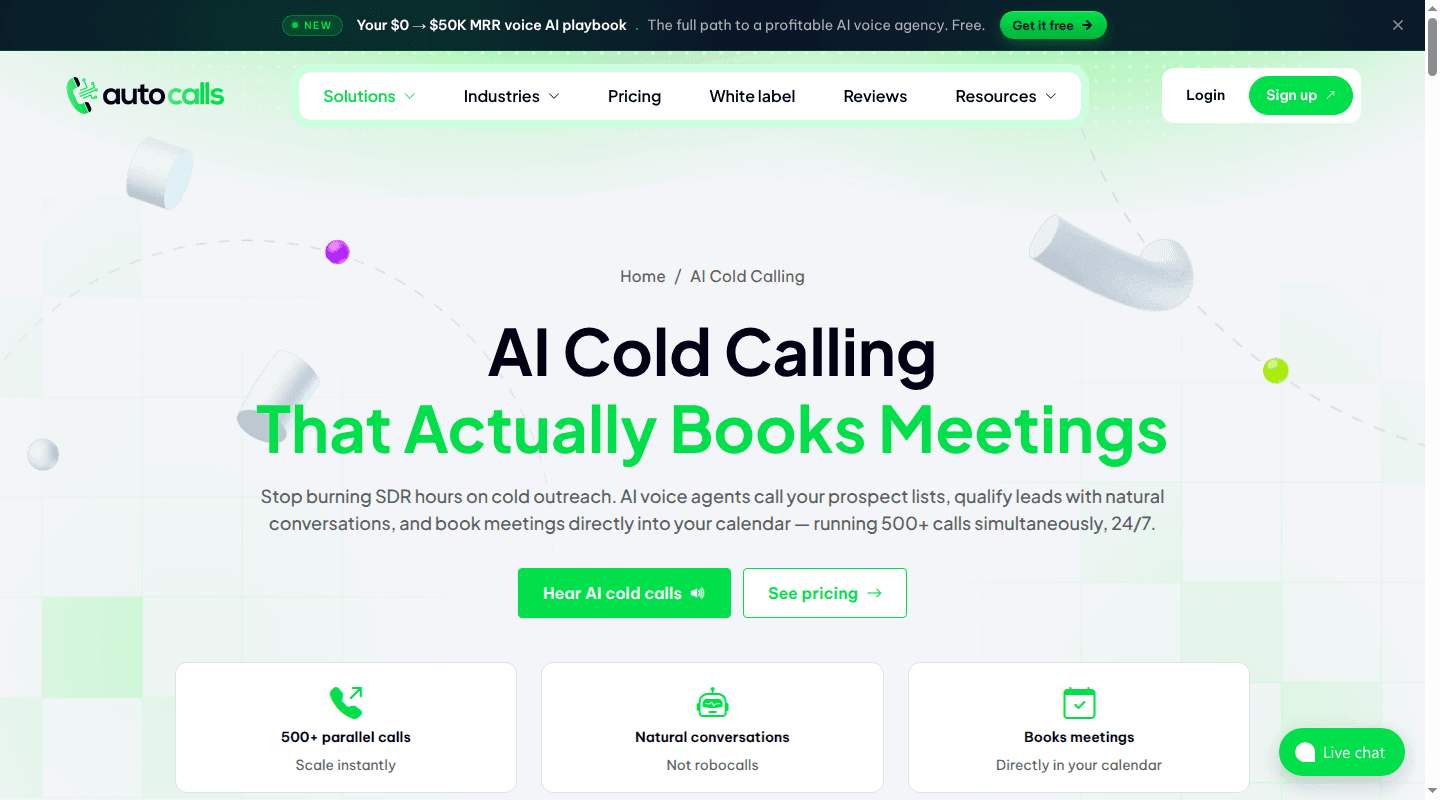
Autocalls offers a no-code agent builder, outbound campaigns, appointment booking, integrations, phone numbers, analytics, and agency-oriented plans. It is designed for a business that wants the agent, campaign layer, and common follow-up actions in one product.
Month-to-month Starter costs $34 and includes 120 minutes, one assistant, one outbound campaign, and three simultaneous calls. Pro and Agency add more minutes, assistants, campaigns, and concurrency. Extra-minute pricing falls from $0.20 on Starter to $0.09 on Agency. Destination call rates are covered by plan minutes, and dedicated phone numbers start at $3.99 each. The White Label tier adds the branded client layer.
The package is easy to understand and quick to operate. It also places the campaign, client portal, agent configuration, and runtime under one vendor. That is an efficient trade for an agency selling a standardized service. A software company building distinct customer workflows will usually want more control over tenancy, product UI, and runtime behavior.
7. Orum: for human SDR teams that need more conversations
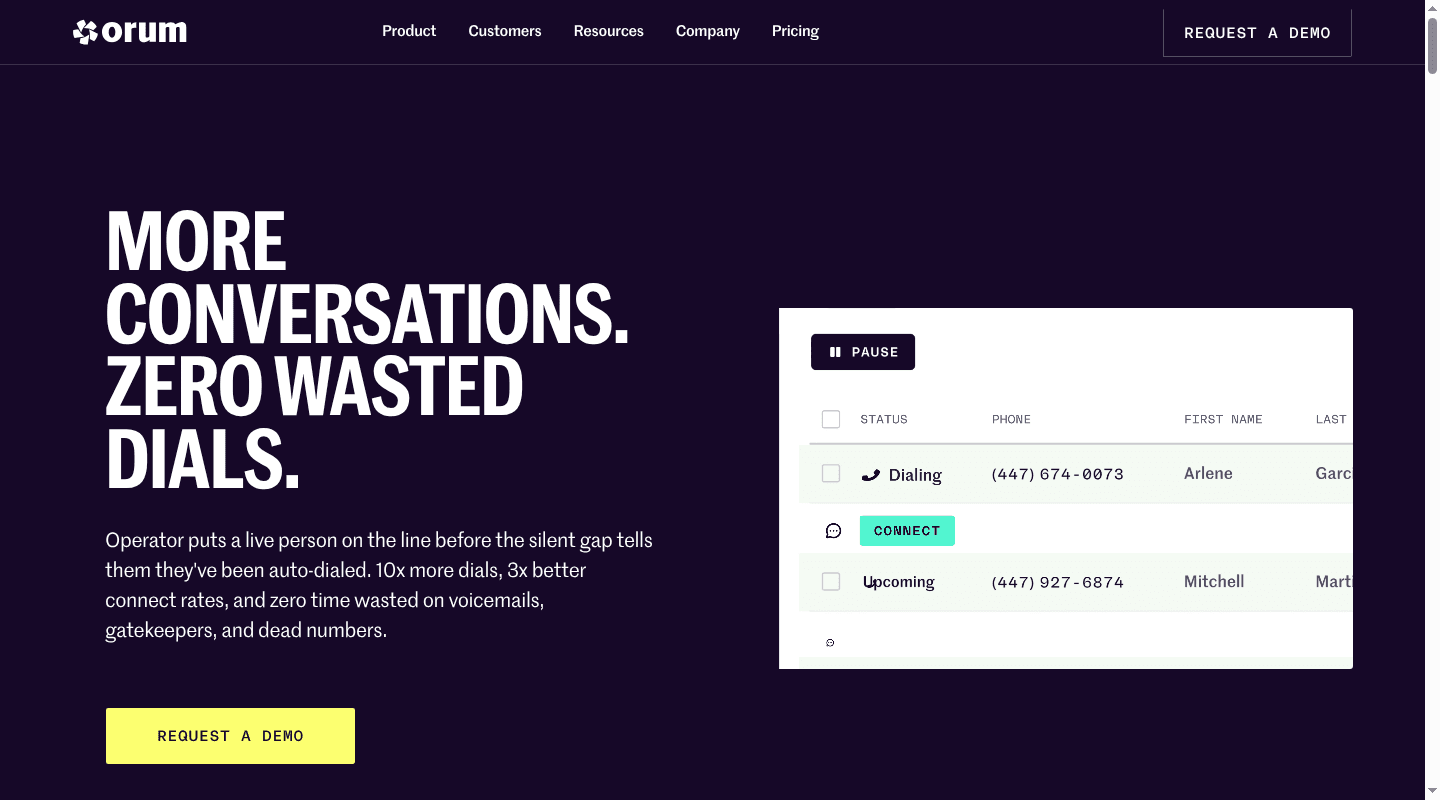
Orum is a parallel dialer. Its AI detects live answers while skipping voicemail and other dead time, then connects a sales representative to the prospect. The product also includes a power dialer, voicemail drop, call recording, call summaries, coaching, analytics, and CRM integrations.
This is the right category when relationship building and objection handling should stay with a person. The representative still owns the conversation. Orum reduces the time spent dialing, waiting, leaving voicemail, and updating records.
Pricing is custom. Orum says the package and number of users affect the quote. A fair pilot compares cost per qualified conversation and meeting, while also tracking spam labeling, rep utilization, and CRM accuracy.
8. CloudTalk: for a phone system with AI-assisted dialing
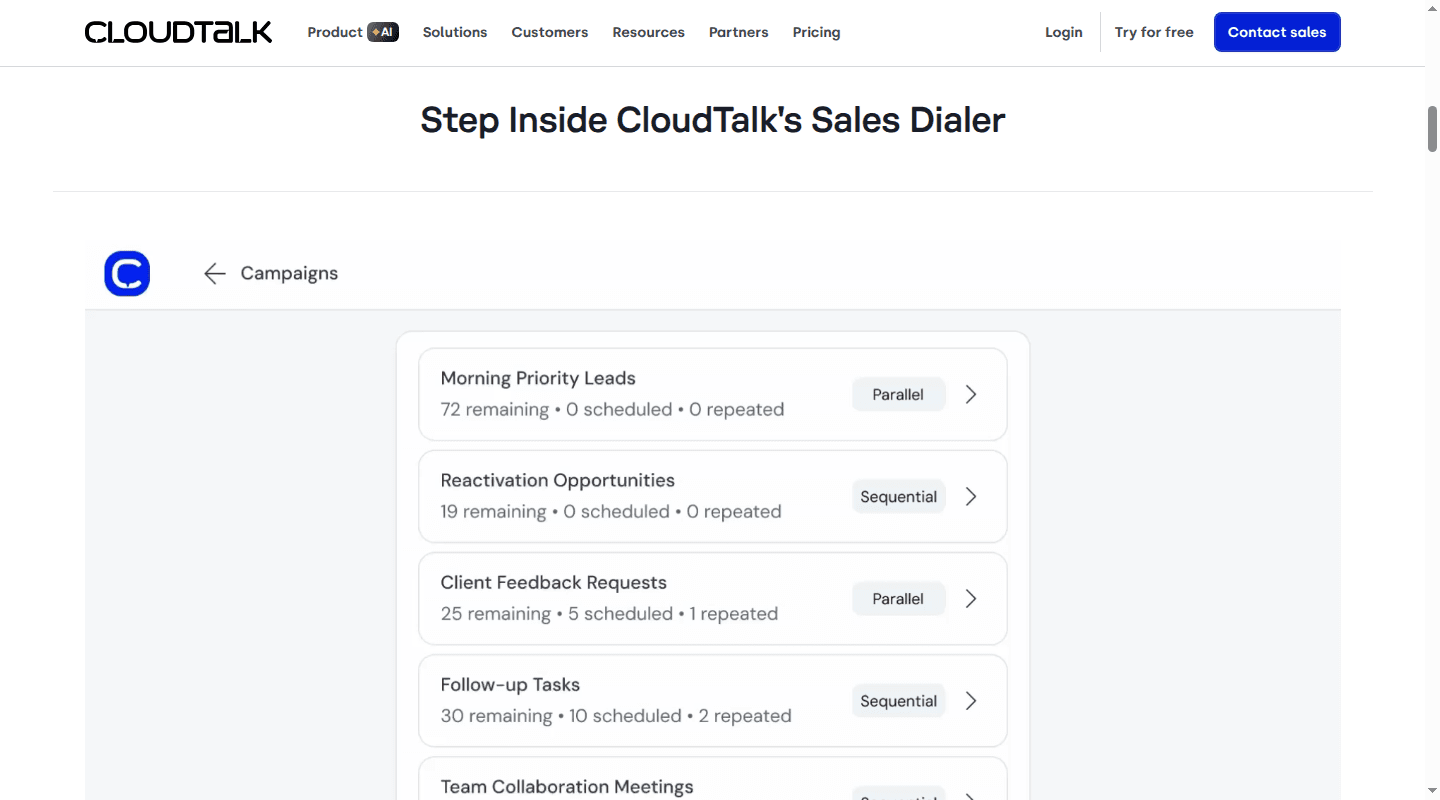
CloudTalk is a cloud phone system for human sales and support teams. Its Sales Dialer supports preview, power, smart, and parallel modes. Parallel mode can dial up to 10 numbers and connect the representative to the first live answer. Answering-machine detection, voicemail drop, caller ID controls, call recording, and CRM logging cover the rest of the outbound workflow.
The Lite phone-system plan starts at €19 per user per month on annual billing. Power Dialer costs €15 per user per month as an add-on and is included with the €49 Expert plan. Parallel Dialer is a €39 add-on. AI Conversation Intelligence adds transcription, summaries, notes, topics, sentiment, scoring, and CRM export for €9 per user per month. Regional currency and calling bundles vary.
CloudTalk provides local numbers and calling coverage, while Bring Your Own Carrier keeps an existing carrier relationship in the design. It also connects to more than 100 CRM, helpdesk, and workflow systems. This is a strong fit when a sales team needs one phone environment and wants AI to remove dialing and review work. The Sales Dialer does not speak to prospects autonomously. CloudTalk sells AI voice agents separately, with their own minute bundles and operating model.
How to choose the right platform
Choose the operating model before the feature list
Use an autonomous agent for a short, well-defined task such as permissioned follow-up, basic qualification, scheduling, or routing. Keep a human caller when the work depends on trust, creative discovery, negotiation, or a high-value relationship. Conversation intelligence is an add-on to a human-led workflow.
Model the complete cost
Calculate a connected minute this way:
loaded voice minute = platform
                    + LLM
                    + speech recognition
                    + text-to-speech
                    + telephony and phone numbers
                    + transfers, recording, and storage
Then divide the full campaign cost by completed outcomes. A cheap minute can be expensive when calls fail, transfers drop, or booked meetings do not attend. Our voice AI pricing guide explains how billing increments, concurrency, and completion rate change the model.
Separate concurrency from call starts
Concurrency is the number of active calls. Calls per second controls how quickly new calls begin. A system can allow 100 concurrent conversations and still need several minutes to start a list because the carrier or platform throttles new calls.
Outbound operations also need scheduling windows, retry rules, voicemail handling, campaign cancellation, idempotent CRM writes, and immediate suppression. These are production requirements, even when the conversational demo sounds good.
Require evidence from failed calls
The useful question is how quickly an operator can explain a bad outcome. The record should connect audio, transcript, model turns, prompts, tools, transfers, telephony events, and timing. Aggregate dashboards rarely identify whether the problem came from a model, carrier, integration, or configuration release.
A production-shaped pilot includes interruptions, silence, voicemail, wrong numbers, ambiguous opt-outs, background noise, off-script questions, tool timeouts, transfer failures, and a disconnected dependency. The voice agent testing guide turns those cases into a repeatable evaluation.
Plan the exit path
List the assets the business must retain: phone numbers, consent records, suppression lists, prompts, workflows, tools, recordings, transcripts, call events, outcome labels, and customer configuration. A bundled platform reduces setup work. It also increases the number of layers affected by a move.
Compliance belongs in the architecture
Software does not make a contact list callable. In the United States, the FCC has ruled that an AI-generated voice counts as an artificial or prerecorded voice under the TCPA. Telemarketing calls using this technology can require prior express written consent, identification, and opt-out controls, depending on the recipient, purpose, number, and call design. The FCC AI voice ruling sets out that treatment.
The FTC's Telemarketing Sales Rule adds National Do Not Call and company-specific suppression, calling-time restrictions, disclosures, recordkeeping, and rules for abandoned or prerecorded telemarketing calls. The FTC compliance guidance explains the federal baseline. State, sector, and recording laws can add more obligations.
Keep eligibility and suppression outside the language model. Each campaign record should carry its permission source, allowed purpose, applicable jurisdiction, calling window, and suppression state before it enters a queue. An opt-out should trigger a deterministic write and stop retries. Our compliance-first pilot guide maps those controls into an outbound workflow.
Build for the job you actually have
Choose Orum when a focused sales development team wants a dedicated parallel dialer. Choose CloudTalk when the same team also needs the phone system, CRM-connected calling, and optional conversation analysis. Choose Autocalls or Bland AI when a business team needs an autonomous campaign quickly. Choose Synthflow for an enterprise program that wants a visual operating system and implementation support. Retell AI and Vapi offer two different API-centered paths, with Retell managing more of the stack and Vapi exposing more provider choice.
Choose Dasha when cold calling is part of a serious conversational AI product and your technical team wants a managed production runtime without giving up the application layer. Start building with Dasha and run the first bounded outbound workflow on the free Developer plan.