The voice-agent product once promoted at Air.ai is no longer presented at that domain. If you are replacing an Air AI deployment or evaluating an old recommendation, start with the operating model you need: a managed production runtime, a composable API, a visual enterprise system, or an open-source framework. The right choice depends on who will own telephony, models, integrations, testing, and production failures.
Air AI alternatives at a glance
| Alternative | Best fit | Current cost boundary |
|---|---|---|
| Dasha | Technical teams building and operating production conversational AI products | Free Developer plan; Growth starts at $0.08/minute. VoIP and large language model tokens are additional. |
| Retell AI | Teams that want a fast hosted start with selectable models and voices | Voice agents cost $0.07-$0.31/minute. Telephony, configuration choices, and add-ons affect the total. |
| Vapi | Developers who want to compose their own speech, model, voice, and transport stack | Hosting costs $0.05/minute. Transport, speech-to-text, model, and text-to-speech costs are separate. |
| Bland AI | Teams that want visual call pathways and bundled AI-component pricing | Start costs $0.14/minute; Build costs $0.12/minute plus $299/month. Telephony is separate. |
| Synthflow | Enterprises that want visual workflow design and vendor-led implementation | Enterprise contracts start at $30,000/year. Final scope depends on volume, telephony, integrations, security, and launch support. |
| Pipecat | Python teams that want open-source control over the runtime | The BSD-licensed framework is free. Teams can run local or self-hosted model and speech components; paid provider and Pipecat Cloud services cost extra only when selected. |
Published entry prices are only a baseline. Your real unit cost includes telephony, model and speech services, concurrency, support, engineering, and failed calls. The useful denominator is a completed booking, resolved request, qualified transfer, or another verified outcome.
This is an eligibility screen, not a call-quality ranking. Voice quality and latency depend on carrier routing, network region, turn detection, speech components, model choice, prompt design, tool response time, and the caller's environment. Cross-option performance numbers are comparable only when those variables are controlled.
Why Air AI is now a replacement decision
The original air.ai URL now presents Air Enterprise Readiness for defense and government. It no longer presents the voice-agent product described in older Air AI reviews. The current site states that Govini is now Air and leads with closing a military-readiness gap.
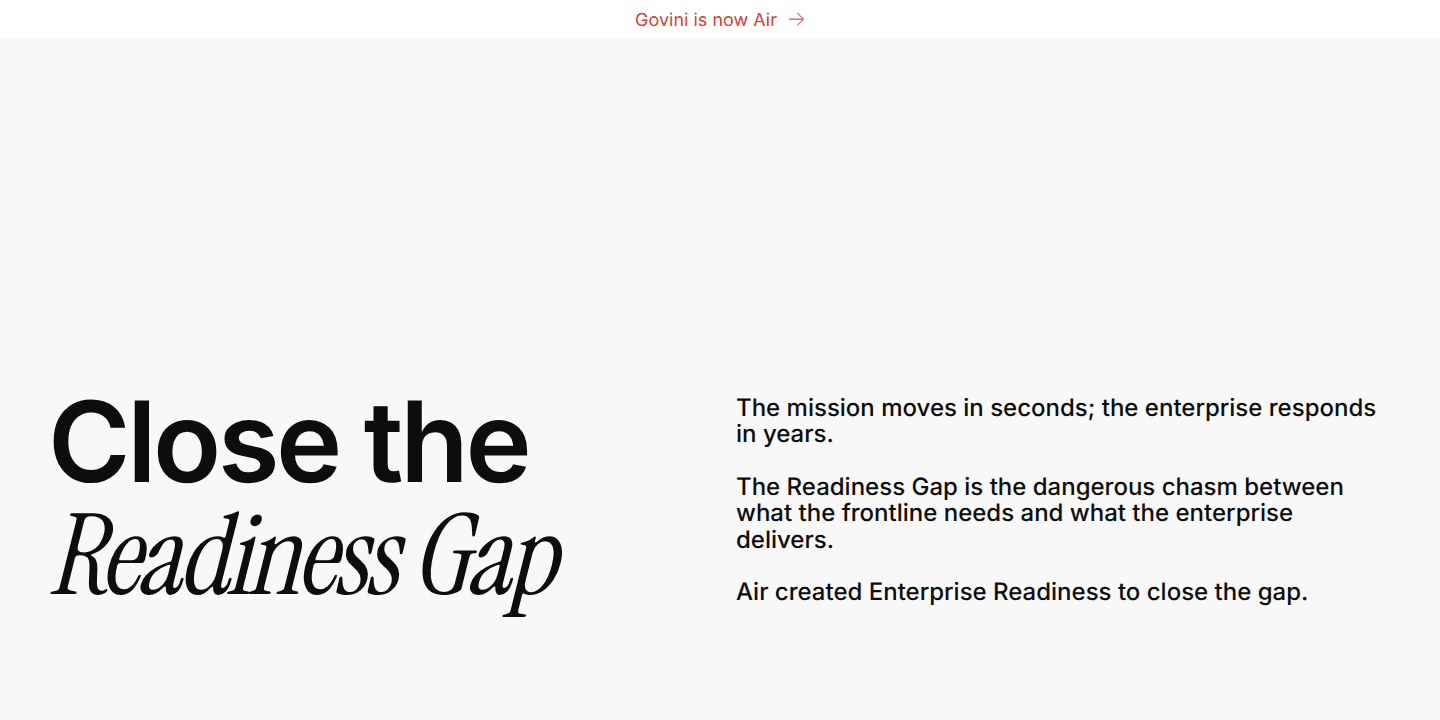
In March 2026, the US Federal Trade Commission announced a proposed settlement that would ban Air AI and its owners from marketing business opportunities. The case concerned alleged earnings, refund, and business-opportunity misrepresentations. It was not a technical test of the voice software. The FTC announcement matters if you bought or considered an agency license, but it does not tell you which replacement will work for your calls.
The operational status of legacy customer accounts is unclear. Preserve your phone-number ownership records, prompts, tool schemas, call recordings, transcripts, consent records, and outcome data before migration.
How the options were compared
Each alternative had to support real-time phone agents and show a current path for integration, deployment, and operation. The comparison includes available features and published price structures. It excludes roadmap promises, unsupported outcome claims, and review-site star scores.
We used five decision points:
- Operating model: managed runtime, composable hosted system, visual enterprise suite, or open-source framework.
- Integration path: built-in tools, native connectors, webhooks, APIs, and Model Context Protocol (MCP). An integration logo alone does not prove that retries, errors, authentication, or data mapping are handled for your workflow.
- Telephony boundary: built-in numbers, supported carriers, Session Initiation Protocol (SIP), or bring-your-own telephony. Carrier ownership affects number portability, regional coverage, call reputation, and migration effort.
- Production control: testing, versioning, traces, transcripts, tool-call inspection, and human transfer. These determine how quickly a team can diagnose failures after launch.
- Price boundary: which runtime, model, speech, telephony, concurrency, and support costs sit inside the published number.
We did not run a common call set across every option, so we do not present first-hand performance or outcome results. We also did not assign synthetic scores or declare a latency winner. Best fit means the option with the least operating mismatch for the stated buyer, after a controlled pilot.
1. Dasha: best for technical teams building a production voice product
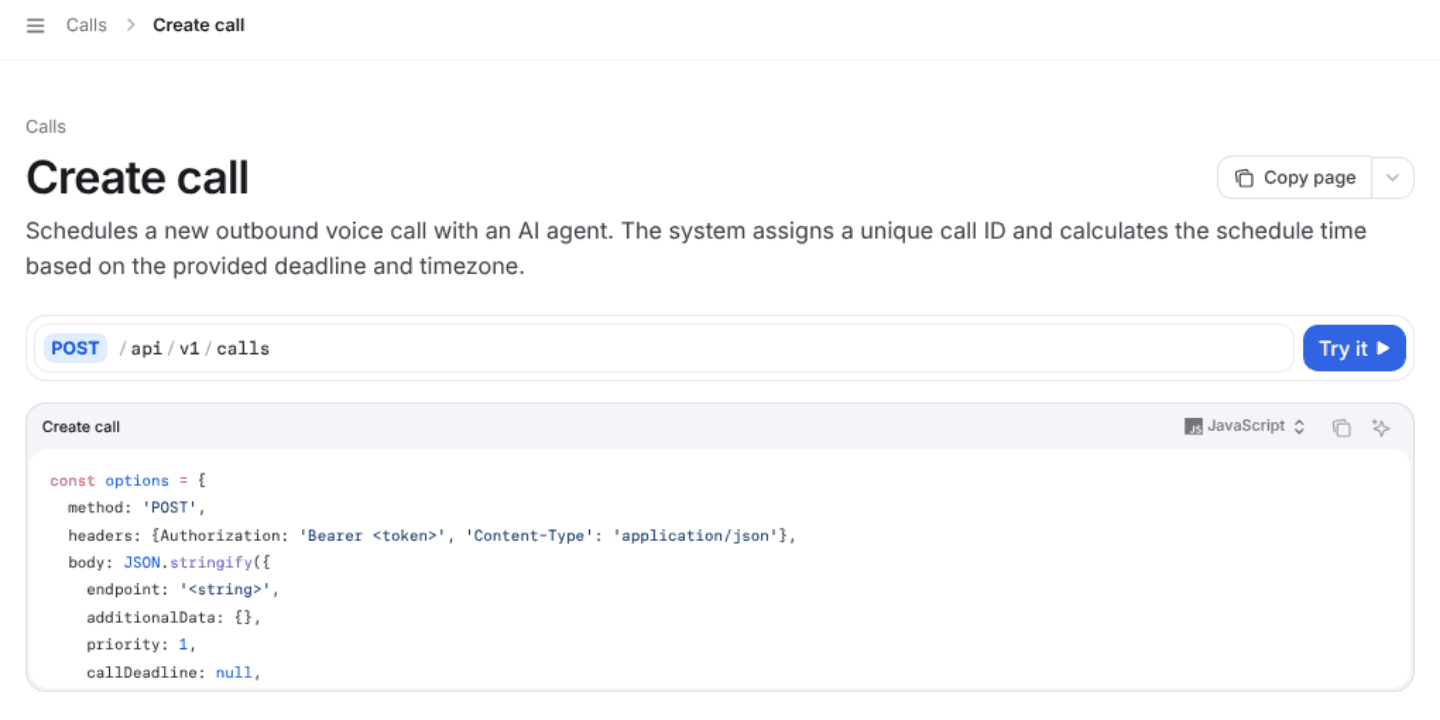
We recommend Dasha when voice is part of a product you plan to operate at meaningful scale. We provide a managed runtime, REST APIs, and a web application for configuring agents, making and receiving calls, connecting tools, testing behavior, inspecting completed calls, and monitoring production activity. The Dasha product overview explains this managed runtime plus operations model.
Our integration surface does not require every team to build each business connection from scratch. Agents can use built-in tools, call external APIs, or connect to MCP servers. Webhooks emit call lifecycle events. For telephony, you can connect Twilio or configure SIP credentials from another provider. You can also keep an inbound call in your own phone system, register it through our API, and bridge that call to an agent with the variables it needs.
Two concrete patterns show where that matters:
- Appointment qualification with a safe handoff: Use a built-in calendar tool when it fits. For a proprietary scheduler, your backend supplies the lead ID, campaign, time zone, and permitted action scope. The agent calls the scheduling API and writes the confirmed slot back to your system. If the tool fails or the request falls outside policy, a warm transfer gives a human the context before connecting the caller.
- A multitenant voice SaaS: Your control plane stores a separate agent configuration, knowledge base, phone setup, and webhook destination for each customer. Calls stay tied to tenant-specific variables and records. After a call, the Call Inspector exposes the transcript, recording, model interactions, tool executions, and timeline needed to locate a prompt, provider, telephony, or backend failure.
We fit technical teams that need the runtime plus operational controls and do not want to assemble the entire media pipeline. We are a weaker fit for a nontechnical buyer seeking a preconfigured receptionist, or for a team with a hard requirement to own the full open-source runtime. Our Growth rate also excludes VoIP and model tokens, so budget those against your actual traffic mix.
2. Retell AI: best for a fast hosted start with model choice
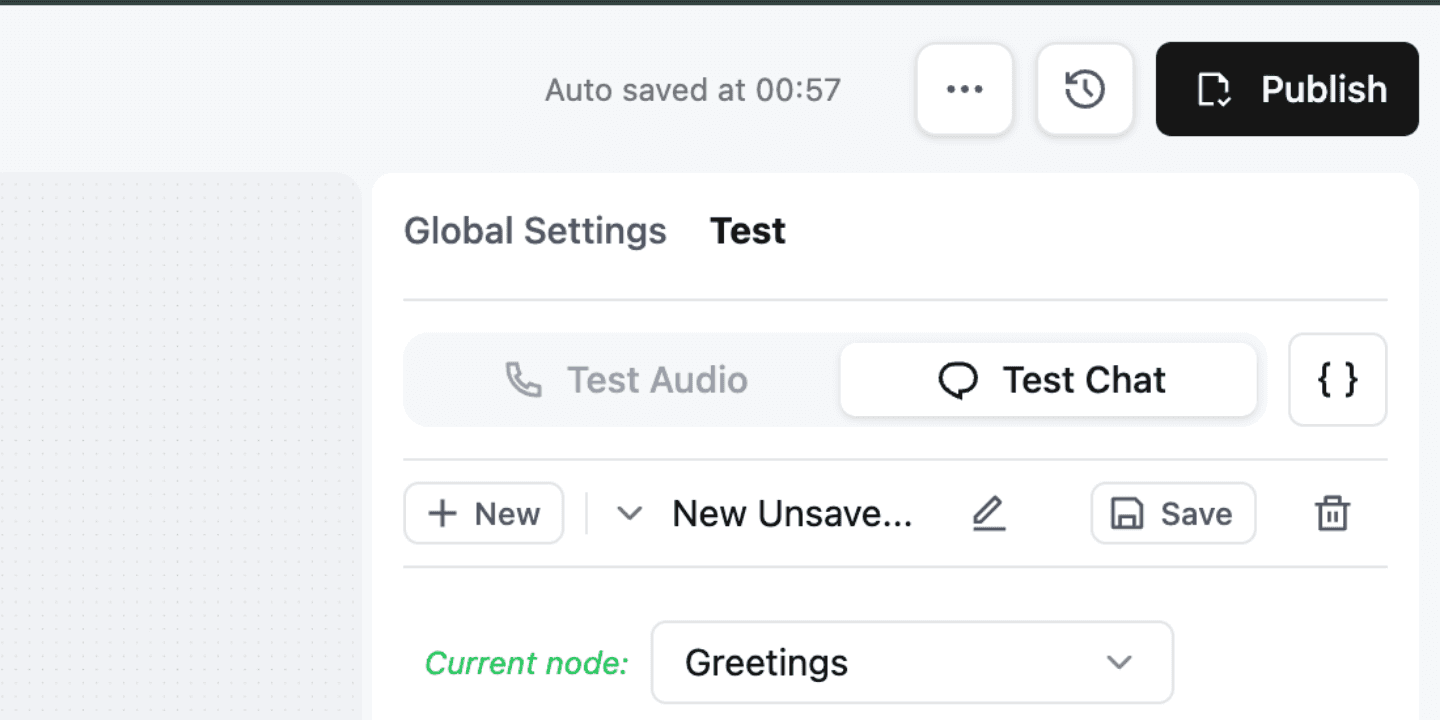
Retell combines a hosted voice runtime with prompt and conversation-flow builders, call analytics, transcripts, webhooks, and API access. Its testing system includes a playground, simulations, batch tests, web calls, and phone calls. Its pricing calculator separates voice infrastructure, text-to-speech, model, telephony, and add-on components.
It fits a product team that wants to launch through a dashboard or API and choose among several model and voice providers. Retell supports its own phone setup as well as custom telephony, which can reduce number-migration work if your carrier is already established. The build documentation shows how speech recognition, response logic, voice, and telephony behavior are configured.
The main dependency is the selected stack. A different model, voice, knowledge-base option, denoising setting, or carrier changes both cost and behavior. The pay-as-you-go plan includes 20 concurrent calls, with additional concurrency billed separately on the current pricing page. Treat a prototype configuration as a versioned bill of materials so production changes do not silently alter cost or turn-taking.
Choose Retell over us when a quick hosted start and broad provider menus matter more than our runtime-plus-operations approach. Choose us when the managed production runtime should be the stable center of a larger conversational AI product.
3. Vapi: best for composing provider-specific voice stacks
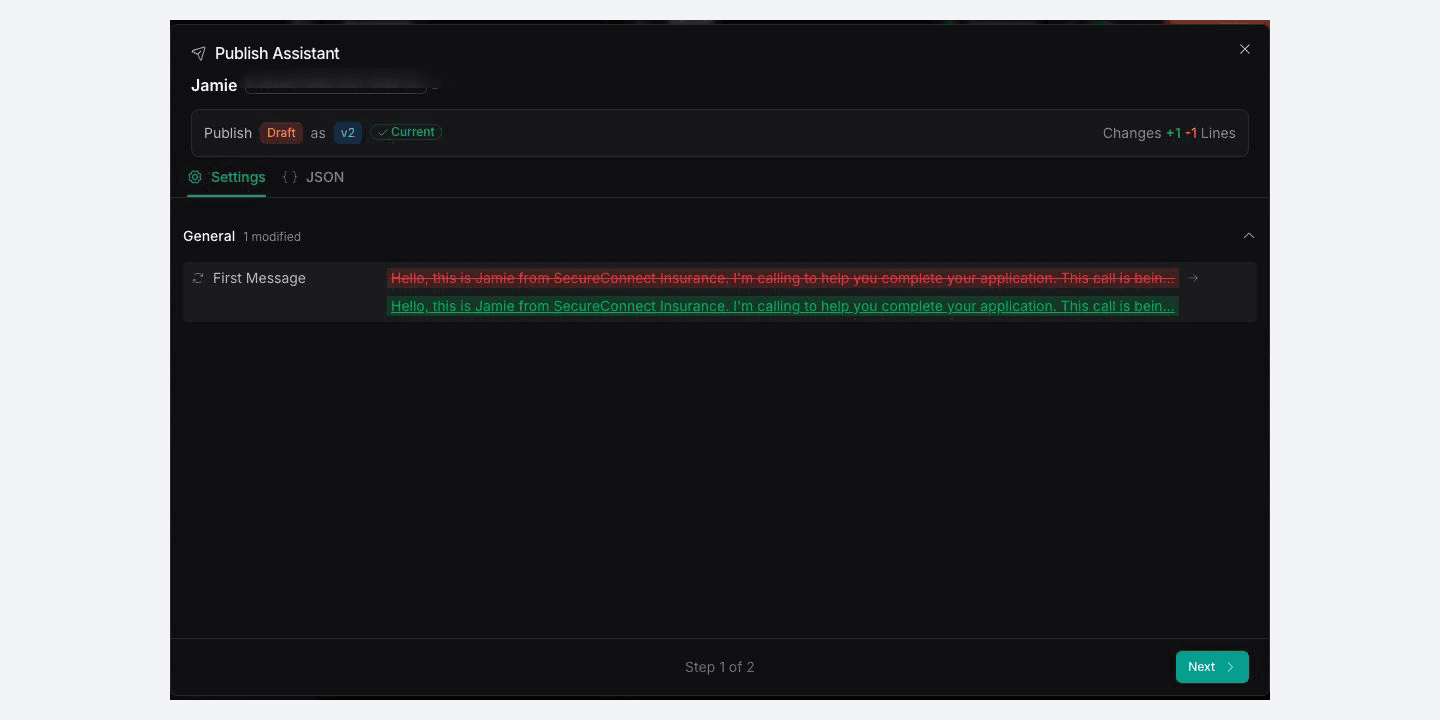
Vapi is hosted orchestration for developers. Its assistants, server and client SDKs, dynamic variables, tools, hooks, and telephony APIs let a team assemble a voice agent from selected transport, speech-to-text, model, and text-to-speech providers. The assistant quickstart shows both dashboard and API configuration.
Component freedom is the reason to choose Vapi. A team can bring provider keys, choose a preferred model or voice, configure fallbacks, and tune the speech pipeline. The same freedom creates the operating burden: cost, latency, data handling, rate limits, outages, and support may span several vendors.
The published $0.05 per-minute fee covers Vapi hosting. Provider and transport charges sit outside it. The usage-only package includes four concurrent calls. The Core success package includes ten, and extra concurrency is billed per line per month. Compliance and data-retention options can also be paid add-ons or enterprise features on Vapi pricing. Vapi also supports draft and published assistant versions, which helps isolate changes from live traffic.
Vapi is a fair choice when engineers deliberately want to own the provider matrix. We fit teams that want one managed runtime to own more of the seams while they keep control of business logic, telephony configuration, tools, and model selection.
4. Bland AI: best for visual pathways and bundled AI costs
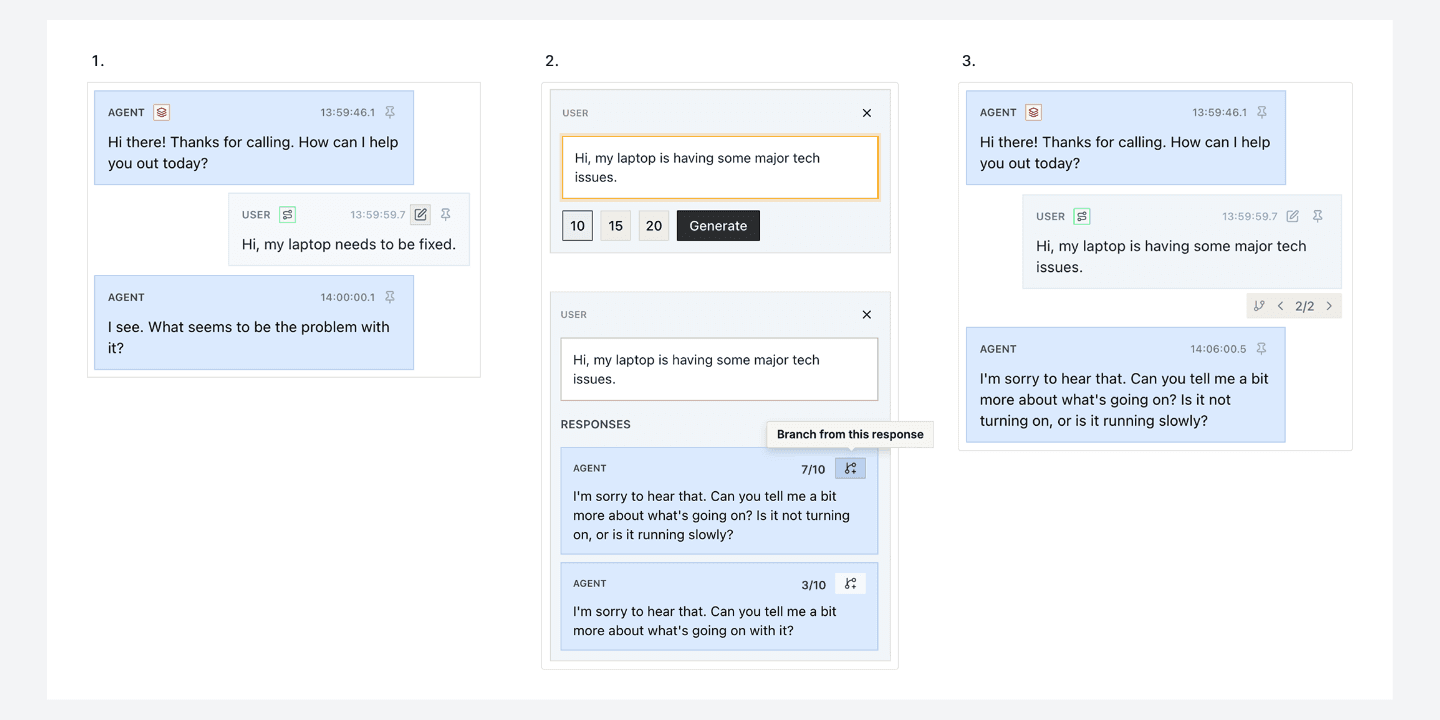
Bland supports inbound and outbound calls, node-based Conversational Pathways, API tools, webhooks, batch calls, call logs, and automated tests. A pathway keeps a stable ID while draft, staging, and production versions hold different node-and-edge snapshots. The Pathways documentation explains that release model.
Its current talk-time rate bundles the language model, speech recognition, and speech synthesis. Telephony remains separate through Bland's carrier setup, your Twilio account, or another SIP provider. The Start plan includes 10 concurrent calls and the Build plan includes 50, according to Bland pricing.
The bundled AI stack simplifies billing, but provider-level substitution is less central than it is in Vapi or Pipecat. Phone numbers and carrier routing remain a separate boundary. Test both the pathway and its dependencies: a correct flow still fails when a carrier, webhook, or downstream API is unavailable. Bland's Testbed documentation shows how real call data can be replayed against node prompts.
5. Synthflow: best for visual enterprise rollout
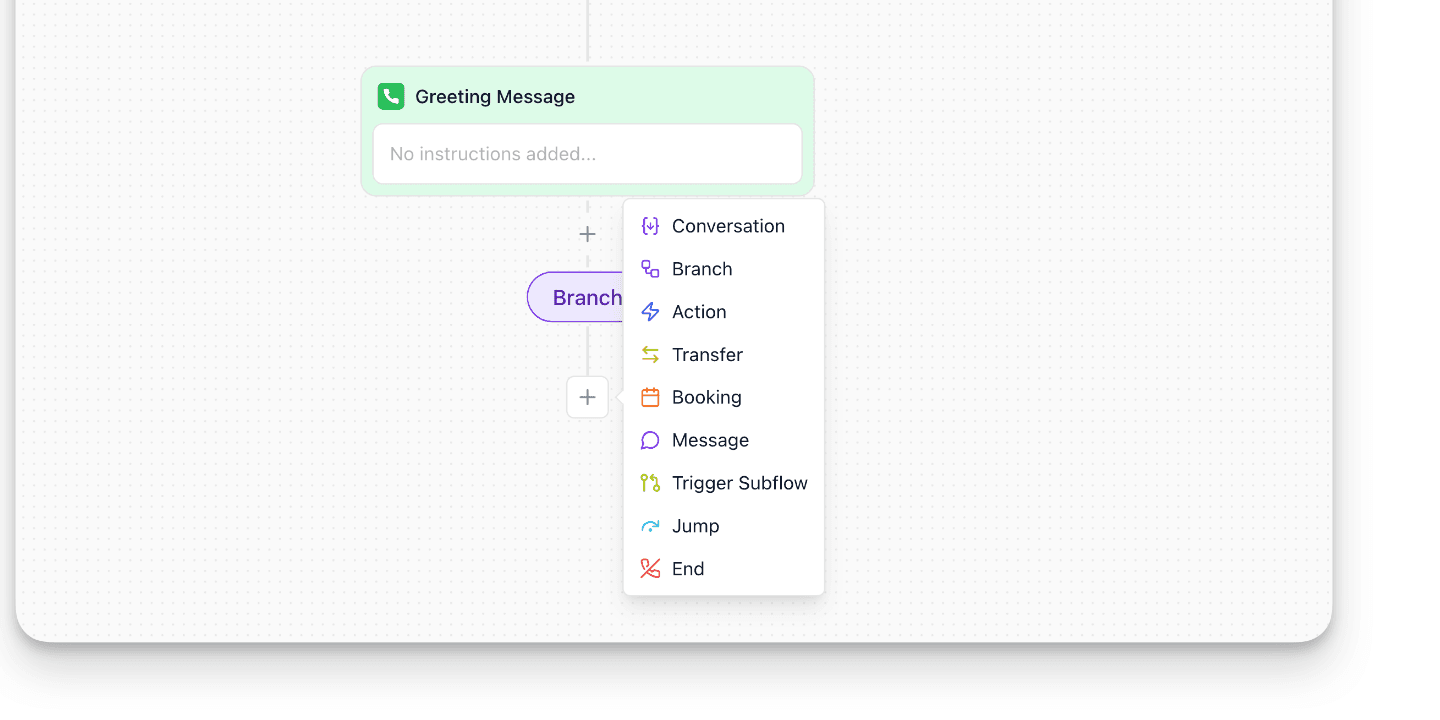
Synthflow provides a Flow Designer, a prompt-based builder, custom API actions, real-time booking, call transfers, version control, simulations, evaluations, webhooks, logs, and outbound campaigns. Its Flow Designer documentation shows the node-based path for structured, multi-step conversations. Telephony can use Synthflow's service, supported enterprise carriers, or SIP/PBX connections.
The current commercial offer is enterprise-led. Contracts start at $30,000 annually, with final pricing scoped around volume, concurrency, telephony, integrations, security, and launch support. Older self-serve prices no longer reflect the current enterprise offer.
Synthflow fits an organization that wants a visual workflow surface and expects the vendor to participate in implementation, testing, and rollout. Its simulations and version control cover prelaunch testing and rollback. That operating model can reduce internal build work, but it makes procurement and solution design part of the evaluation. A small engineering team seeking a low-commitment API pilot will usually find our Developer plan, Retell, Vapi, Bland, or Pipecat easier to screen first.
6. Pipecat: best for open-source runtime ownership
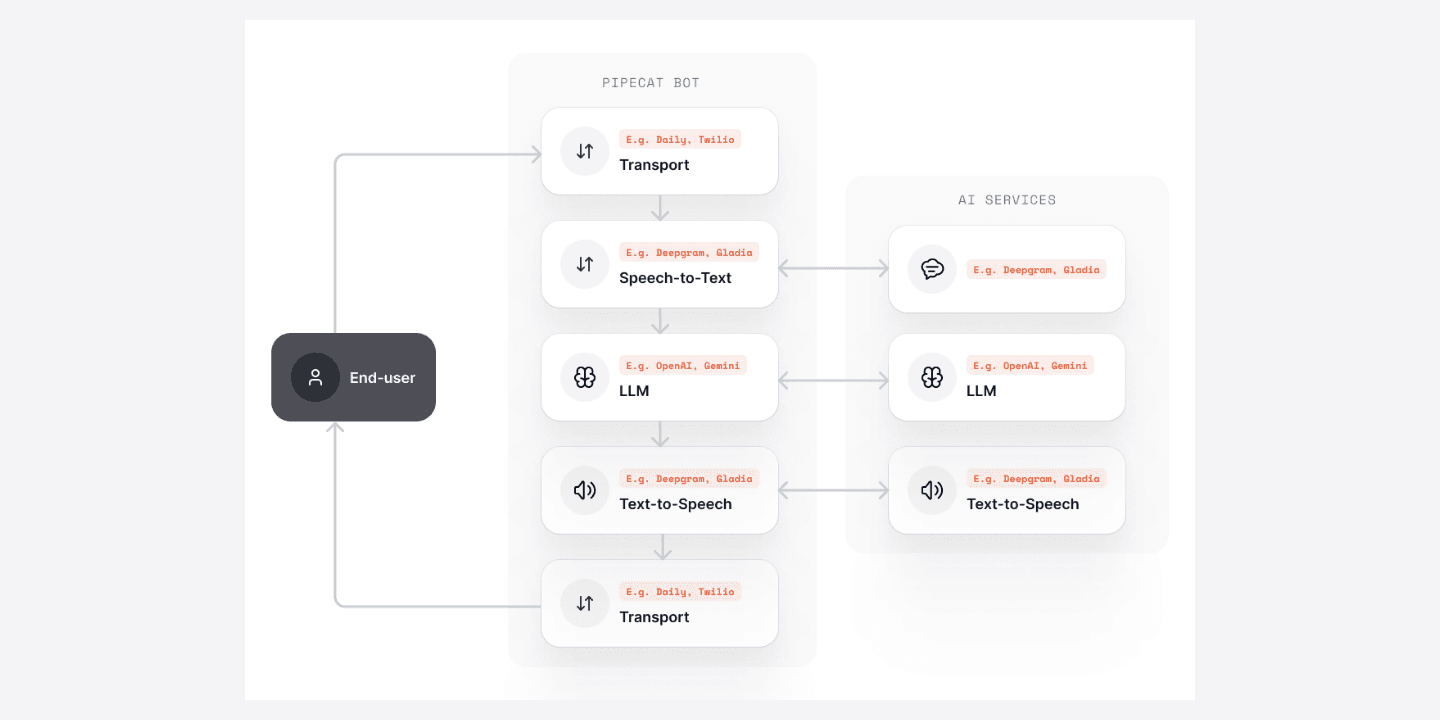
Pipecat is an open-source Python framework for voice and multimodal agents. Its pipelines connect transports, audio processing, speech, models, and voice components. Pipecat Flows adds structured conversation paths, while Pipecat Evals supports scripted and simulated scenarios. Client SDKs cover web and mobile use, and telephony integrations include Daily, Twilio, Telnyx, Plivo, and Exotel.
Choose Pipecat when source access, custom processors, or direct runtime ownership is a firm requirement. The framework can use paid hosted providers, local models, or self-hosted model and speech services. Its license does not create a mandatory provider bill. Costs arise from the infrastructure and services you choose, plus the engineering work to operate them. Pipecat Cloud is optional when a team wants managed deployment.
With a self-managed deployment, your team owns scaling, observability, upgrades, incident response, and the interfaces between services. We remove more of that infrastructure work. Pipecat exposes more of it. The right answer depends on whether runtime ownership is a product advantage or an operating tax. Our open-source comparison examines that decision in more detail.
Run the same production-shaped pilot on every finalist
Do not choose from staged demo calls. Use the same call set, phone regions, success criteria, backend, and failure cases for every finalist.
A practical pilot can use 40 calls per option:
- 10 routine calls with clean audio
- 10 calls with interruptions, corrections, and short answers
- 10 calls with noise, accents, proper nouns, or another language your traffic requires
- 10 calls that force a tool timeout, bad data, no appointment availability, or a human handoff
Keep the business prompt and tool contract equivalent. Record any unavoidable provider differences. For each call, measure:
- task completion against backend state, rather than the transcript alone
- incorrect or unauthorized actions
- tool-call success and recovery after timeouts
- transfer completion and whether the human receives useful context
- end-of-turn to first-agent-audio latency at the median and 95th percentile
- interruption behavior and duplicated or lost speech
- total billed cost, including telephony, models, speech, add-ons, and concurrency
- operator time spent diagnosing and correcting the call
Set rejection thresholds before running the pilot. An option should fail regardless of average score if it performs an unauthorized action, loses required data, cannot recover from a tool failure, or cannot produce enough evidence to diagnose the incident.
Finally, divide total pilot spend by verified successful outcomes. Per-minute rates can favor an option that needs more retries or human cleanup. Cost per valid booking, completed intake, resolved request, or qualified transfer is the number that survives contact with production.
Choose the operating model before the feature list
For a technical team building a voice product, start with us and run the production-shaped loop above. Retell is a strong hosted alternative when rapid setup and provider menus lead the decision. Vapi fits teams that want to compose their stack. Bland simplifies AI-component pricing around visual pathways. Synthflow packages visual design with an enterprise rollout. Pipecat gives engineers direct runtime ownership.
Whichever model you choose, keep phone-number control, prompts, tool schemas, transcripts, evaluation cases, and outcome data portable. Those assets shorten this migration and the next one.
Start building with Dasha using one real call flow, one backend tool, and one measurable outcome.